

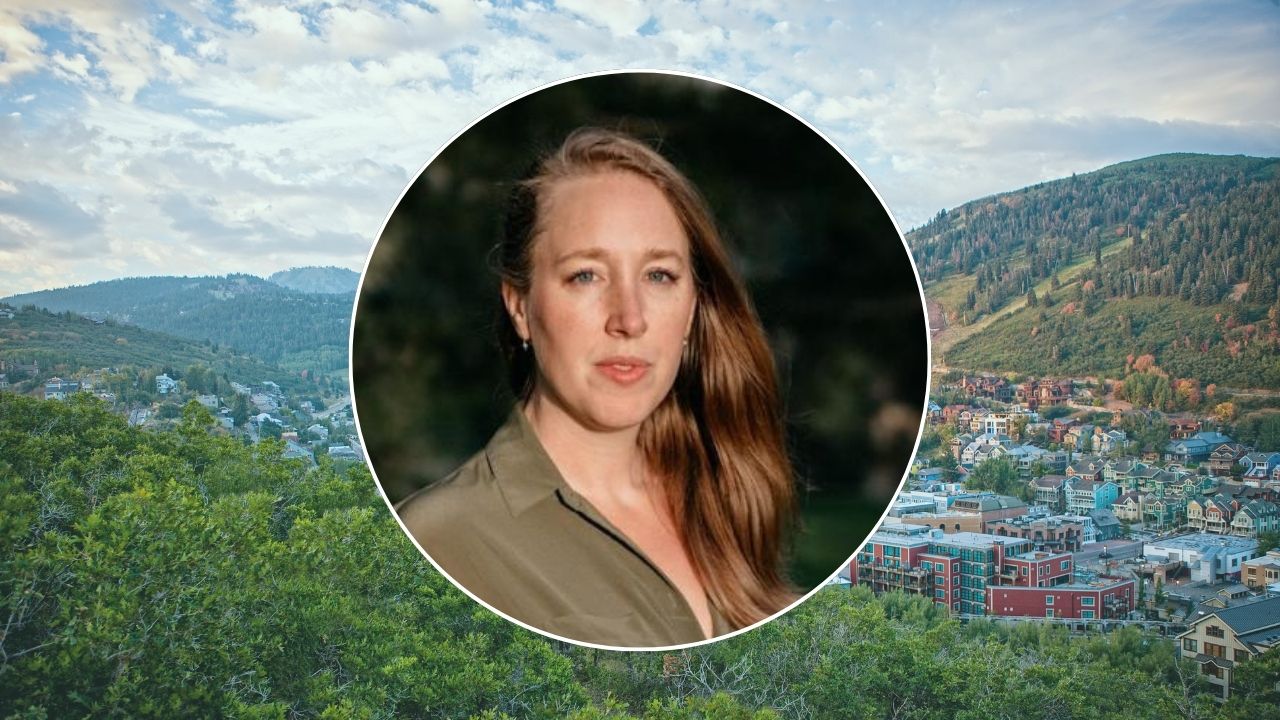
“Mountainkind is about being kind to each other, being kind to your neighbours, being kind to the mountains. […] We’re inviting [visitors] into a town that cares.” – Morgan Mingle
In Park City, Utah, a little kindness goes a long way, thanks to its Mountainkind philosophy, which is shaping sustainable tourism.
In this episode of Travel Beyond, Morgan Mingle, Director of Sustainable Tourism for the Park City Chamber and Visitors Bureau, reveals how this community of 8,000 residents successfully hosts over 3 million annual visitors while maintaining authentic local values. Rather than merely using sustainability as a promotional tool, Park City invites tourists to participate in genuine community care.
The Mountainkind ethos centres on being kind to each other, neighbours, and the mountains themselves. This approach shows up in practice through the nation’s first public electric-assist bike share system, free public transit, over 400 miles of well-maintained trails, and ambitious net-zero carbon goals by 2030.
Park City’s sustainable tourism plan emerged from extensive community engagement, including over 2,000 resident sentiment survey responses and input from a 22-person stakeholder council with diverse perspectives. This destination demonstrates that adopting a bottom-up approach can ensure tourism supports rather than strains the community, addressing everything from workforce housing challenges to trail maintenance.
You’ll also learn:
- How Park City’s free public transit, 400+ miles of trails, and the nation’s first public e-bike share system support car-free mountain adventures.
- How Park City balances 3 million annual visitors with 8,000 residents through strategic shoulder season programming and resident sentiment monitoring.
- Why Park City’s net-zero carbon goals by 2030 required unprecedented regional collaboration and innovative solar energy partnerships.
- How Park City’s volunteer opportunities, from dog hiking to adaptive recreation support, let visitors give back during their stay.
Subscribe to Travel Beyond through Apple Podcasts, Spotify, or your favourite podcast player.
Show notes
National Ability Center — A pioneering nonprofit providing adaptive recreation opportunities for individuals with disabilities, offering everything from skiing to rock climbing in an inclusive environment.
Park City Pathway System & E-Bike Infrastructure — Detailed information about Park City’s 400+ miles of interconnected trails and the nation’s first public electric bike share programme.
Park City Sustainable Tourism Plan — The comprehensive 10-year plan developed through community collaboration to balance economic benefits with environmental and community wellbeing.
Summit Bike Share — America’s first fully electric public bike share system, featuring nearly 200 e-bikes available 24/7 across Park City’s extensive trail network.
Visit Park City Official Site — The official tourism website showcasing Park City’s Mountainkind philosophy, year-round activities, and commitment to sustainable mountain tourism.
Images provided by Visit Park City.
Episode transcript
Morgan Mingle: When you’re here, treat the mountains like we treat the mountains. Mountainkind is really just about that connection and about our community and inviting people that are visiting to experience it with us.
Peter McCully: Welcome to Travel Beyond. I’m Peter McCully for Destination Think. On this episode, we look at travel’s role in making a better world, and we highlight leading destinations and change makers. Our guests are taking local action that the world can learn from. They’re helping to regenerate ecosystems, communities, and economies, and they’re making positive change happen from the bottom up.
Many of the voices we’ve highlighted are part of the Destination Think Collective, a peer group of more than 20 ambitious, forward-thinking destinations working toward a better future for travel and the planet. Today we’re exploring what happens when a mountain town chooses community stewardship over performative sustainability.
Park City, Utah, demonstrates how genuine care for people and place creates meaningful tourism experiences. This community of 8,000 residents successfully manages over 3 million annual visitors through their Mountainkind philosophy—an authentic way of being that invites travellers to treat the mountains like locals do.
Rather than creating sustainability programs primarily for tourism marketing, Park City lives its values through practical infrastructure: the nation’s first public electric-assist bike share system, free public transit, over 400 miles of well-maintained trails, and ambitious net-zero carbon goals by 2030.
We spoke with Morgan Mingle, Director of Sustainable Tourism for the Park City Chamber and Visitors Bureau, to tell us about how local values are shaping this mountain destination for the better.
Morgan Mingle: My name is Morgan Mingle. I’m the Director of Sustainable Tourism for the Park City Chamber and Visitors Bureau.
Peter McCully: Morgan, for someone who’s never been to Park City, what are some of the experiences you always recommend that capture what makes it a special place?
Morgan Mingle: I think for anyone who is coming to Park City, it’s usually for one of the big two or three reasons that people come to Park City. They’re coming for skiing, for snowboarding, or maybe for mountain biking. But I think as a community and as a destination, there’s much more that we have to offer. Often I’ll recommend some of just the little cultural experiences that I love, that I feel really make Park City special.
I think our arts and culture scene is just incredible for such a small town, and there are some really great experiences that you can really dig into to both support those local artisan artists and makers. Do some really unique, special shopping, but you can also get your hands in it.
We have a glass-blowing studio that you can go and learn how to do glass blowing. You can go to Kimball Art Centre where they have pottery classes. They have figure-drawing classes. There are just many ways to really sink your teeth into and engage in some of that vibrant arts and culture scene, even as a visitor. That I think is really special.
I also think that our food can be surprisingly great, and same with the beverages. I think that Utah sometimes can have a reputation for being a dry state. There’s a lot of history with restrictions with cocktails and beers and whiskeys, but in Park City, we have some really great distilleries and some really talented mixologists that you can really sample and taste some different flavours of the mountain in a way that sometimes people don’t think of when being on destination in Utah.
Peter McCully: What’s your favourite season in Park City and why?
Morgan Mingle: I love the fall. I think the changing colours are really special. I grew up in Texas and we didn’t really have fall colours and changes. The first year that I saw the aspens change colours up in an area called Bonanza Flats right above Park City, it blew my mind. I didn’t quite realize how extreme and saturated and yellow aspens really get as someone who is just new to the place. It’s just incredible.
I love the fall. It starts getting crisp again, makes hot coffee even better first thing in the morning. I think there’s a little bit of a buzz with being in a ski town, kind of knowing winter is coming. I actually don’t ski myself, but it’s infectious energy, right? When everyone around you is just getting excited to get back on the slopes again. I feel like fall is the first taste that it’s coming, and it’s just a great little buzz.
Peter McCully: Park City has been called a four-season destination. What draws people here beyond that famous skiing you’re talking about, especially if sustainability is important to them?
Morgan Mingle: People are always going to be coming to Park City for the incredible snow, the skiing, the snowboarding. But we’re really seeing more people come in the summer, in the shoulder seasons, because it offers such great cultural experiences and really great integrated trail networks for folks that are interested in mountain biking.
Like I mentioned, my favourite season is fall, so we do have more people coming to experience those vibrant fall colours, and it’s really nice to come visit a destination in those periods where it’s just a little bit quieter than the ski season.
I also think it’s a really attractive place to come visit, especially for people who are sustainability-minded, because it offers an experience for folks that might want a little break from their cars. I think that we’re in a unique town because we are well integrated with our bike share system, with our free public transit system, and many offerings that fall within that network that you really can just get out of your car. Especially for people that live in North America or other car-centric societies, it’s just really nice to be able to take a vacation and have a break and get around with your feet or with pedals or connecting with locals on the public transit system. I think that is a really strong offering for folks that are wanting that time away from car-centred travel.
Peter McCully: Can you tell us about the Mountainkind philosophy? What does that mean for visitors in practical terms?
Morgan Mingle: We really think of Mountainkind as an ethos, both for community and residents. To be Mountainkind, it’s about being kind to each other, being kind to your neighbours, being kind to the mountains. What we’re trying to display to visitors when they come to Park City is that we’re inviting them into a town that cares. It’s a town of locals that are going to help pick up trash on the side of the road on a free weekend. It’s a town of folks that are going to give you the right of way when they’re out on the mountains. It’s a town of people that really care about their workforce and are trying to do right by them, and not always succeeding, but always trying.
That’s what Mountainkind is about—just this authentic way of being where you care and you don’t always get it right, and it’s not always perfect, but you care and you try. What we’re hoping that visitors see is just a little bit of who we are. We’re inviting them into that. When you’re here, treat the mountains like we treat the mountains. When you’re here, you should definitely go to this coffee shop on the corner that’s owned by a local and try whatever is special they’ve dreamed up for the month. Mountainkind is really just about that connection and about our community and inviting people that are visiting to experience it with us.
Peter McCully: It sounds like the residents are very proud of where they live.
Morgan Mingle: They definitely are.
Peter McCully: Park City, as you mentioned, has over 400 miles of trails and the nation’s first public electric-assist bike share. I’m interested in how those connect to the visitor experience. What should a first-time visitor know about getting around without a vehicle in Park City?
Morgan Mingle: I think that we’re a community that has a lot of infrastructure to be able to get around without a car, and some of that is just miles and miles of trails. Like you mentioned, there are over 400 miles of well-maintained trails in the immediate Park City area. We also have paved multi-use trails that are an option for people to get around and commute, run errands, get to whatever show you’re seeing that night in a way that feels safe and disconnected from the regular vehicle travel in the area.
It also is really nice, especially in those summer months when we have the bike share out, to be able to get around with these pedal-assist e-bikes. We have Summit Bike Share in our community that’s run actually by local government. It’s run by the Summit County Government, and it essentially offers a low-cost bike share option for folks that might just want to be able to grab a bike, go into town, park it at a docking station, and you just really don’t have to worry about bringing your own bike. Or maybe it’s slightly too far that you don’t want to walk that day. You can just grab an e-bike, you can get there no sweat and ready for whatever activity you’re doing.
I think what I hear often from people that use the bike share system is that they love that they have some flexibility. You can grab a bike share next to our beautiful White Barn that welcomes you when you’re coming into town. You can ride it into town, park it at Main Street, go shopping, go to dinner, do what you’d like, and then you actually don’t have to worry about that bike again. If you wanted to hop on a bus to get back to your accommodation, you don’t have to worry about bringing it back to where you got it. It offers a really nice, multimodel flexibility for folks that are interested in that offering.
Then I mentioned our bus. The bus system is completely free, and you don’t have to worry about checking in, buying tickets. You don’t really have to question like, oh, do I have enough change? What’s the process for this? You just hop on and if you’re not entirely sure where to get where you’re going, all of our bus drivers are super-friendly, and they can help you out. If you aren’t on the right line, they’ll put you in the right direction. It’s a really worry-free way to get around town, and in a way I think that we allow people to just ask questions, be curious, try the bus because what do you have to lose?
Peter McCully: Morgan, it sounds like it’s fairly easy to get around in Park City. How big is the city centre?
Morgan Mingle: The city itself is about 20 square miles. The Park City area is a little bit bigger than the actual Park City limits, but the majority of things that people are going to want to experience while they’re in Park City are going to be within those 20 miles or so.
Peter McCully: Some of the historical experiences include Park City’s mining heritage and the Victorian Main Street. Tell us about those.
Morgan Mingle: Park City is a really interesting town for history. We were established as an early silver-mining town and prospecting started in the mid-1800s in Utah, and there’s much to sink your teeth into. For folks that are interested in learning more about history, we do have a history museum that’s actually on Main Street, as well as a couple of self-guided walking tours that you can take in that historic Main Street area.
There’s one in particular that I am really passionate about that is on an app called Travel Stories, and it is a way to walk around that historic Main Street area and get a glimpse back into the past and understand all of the dynamics and kind of social infrastructure that helped a mining town like Park City run, thrive, work—at least for some people who were thriving, then some people not as much. It’s a town that was run on immigrant labour, and there are some really interesting stories about women in Park City and how they really established a place for themselves in a mining town where traditionally that would be mostly men workers that are running that mining town.
We have the museum, which I think is really incredible. The walking tour, which I think really helps connect what you’re seeing with the past, and then you’ll see just different little relics sprinkled around. If you’re up on the mountainside, you’re skiing, you’re hiking, you’re mountain biking, you’ll stumble upon different mining sites, different mining buildings, some of them in various states of repair. It really helps give you that sense of place when you’re just doing your thing, you’re doing outdoor recreation, and then you pop out and you’re in this huge mining complex where you see Silver King Mine, and you can look across and see all of the different infrastructure that helps support that.
History is really cool. I think something else that’s a little bit undersung in the Park City area, but you see it a little bit more just outside of town in other parts of Summit County, is some of the Indigenous presence in that area. The whole area was traditional home to nomadic Shoshone and Ute Tribes, and they often spent their summers up higher in the mountains near the Park City area. Depending on where you’re exploring in the county, you might see petroglyphs or pictographs up in the rocks there and various nods to some of that connection to the land that the Ute and Shoshone people still have in that area.
Peter McCully: Morgan, you were telling us about the art scene in Park City. What makes Park City unique as a cultural destination? I’m thinking about events like Sundance and as you started to tell us, the art scene.
Morgan Mingle: I think arts and culture have always been a little bit of a part of Park City history because in a way it’s always felt like a little bit of a community of outsiders. We were talking about early mining history, and in a state like Utah where the predominant religion and influence is the Latter-day Saints community, Park City was never really firmly established as that. Most of the miners were of different faiths, and in that way, the establishment of Park City has always felt just slightly different than some of the surrounding areas.
I think there’s a through-line with that feeling of just a little bit different that attracts makers, artists, folks that are just looking for community with other people that might feel just a tiny bit different. We see that through-line today of being the home of Sundance for many years, of supporting those up-and-coming artists, filmmakers as part of that event. But even more than that, we are really proud to be the home of a lot of different kinds of artists and makers and have really proper support and infrastructure to make sure those people feel like they can thrive in our community.
I have to give a shout-out to the Summit County Arts Council, who does an incredible job of uplifting that local arts scene and connecting artists to opportunities in our community. We’re seeing more and honestly prioritizing more and more building those connections between artists and other local businesses that might enjoy having some local art infused in what they do. We’re being really mindful about making sure that we are maintaining that spirit of a little bit different and a place where arts can really thrive.
Peter McCully: For visitors who would like to give back during their stay, are there opportunities for drop-in volunteer programs, that type of thing?
Morgan Mingle: There are. There’s a really great kind of first-stop resource that serveparkcity.com, and it is a database that a lot of the nonprofits in our community are engaged in. As they need volunteers for certain projects, they can proactively post them on that website. If folks just want to see what options might be available or where there might be an immediate need, that’s a really great place to start. There’s not always an offering available on the day you want, but again, good place to start.
Then we have some other partners that often would love to have volunteer support. One is a local animal shelter called Nuzzles and Co. They will allow folks to essentially take dogs out for a hike for the day. It’s great for the dogs, it’s great for people that might be missing their dogs that are visiting Park City, so that’s always a really fun volunteering option for someone who might want to give back a little bit.
We also are home to the National Ability Centre, and they’re often looking for volunteers to help with different programs or different events that they might be hosting. For those that might not know, the National Ability Centre is a local nonprofit that specializes in adaptive recreation for people of all different kinds of abilities. That’s everything from skiing and snowboarding to mountain biking, really any kind of outdoor rec activity you can think of. They will help people work through how to adapt them for their own needs, and it’s a really robust operation and they always really love having volunteers engaging with them. You do sometimes need to coordinate in advance with them to just make sure that there is an appropriate opportunity for the time that you’re in town.
Lastly, we also have a pretty robust Christian Centre in the Park City area and they provide a lot of different resources, especially for workforce. They can always have volunteers help with sorting food donations, sorting clothing donations, helping coordinate and set up the materials there. I think all of those are really great options for folks that might want to start looking into giving back while they’re on vacation. But there’s a number of other nonprofits in the area that often need support and they’ll usually post on their social media whenever they need outreach and support in that way.
Peter McCully: Morgan, you mentioned the National Ability Centre. How does accessibility and inclusive tourism fit into your sustainability tourism story?
Morgan Mingle: We are really proud to have National Ability Centre as part of our community, and in fact, they’ve just expanded to a second campus. I believe it was last winter they opened a facility that is on-mountain as well as keeping their ranch that is just on the outskirts of Park City. They are just fantastic again with working with people of all different kinds of abilities to get them engaged in the sports that they want to be engaged in.
Part of the reason why a nonprofit like that can thrive in a place like Park City is partially due to us having been an Olympic host in the past, and with that, host for the Paralympics. We’re a community that really cares about making sure that if people want to go out and experience nature and have fun and do outdoor recreation, we want to make sure that we’re giving them the resources to do that.
On a broader scale, in general, Park City is a pretty accessible destination and is pretty on top of things when it comes to ADA rules. But this is something that we’re working on being better about communicating to folks too. Some work that’s in progress is really just pulling together all the resources that we have for folks that might have different physical or mental abilities and how they navigate around Park City and experience it in a way that’s most fulfilling. Definitely stay tuned. Our website’s going to be having quite a bit more information coming up, but it’s in development right now.
Peter McCully: Off the top, you mentioned the dining scene in Park City. I’m wondering how local restaurants and food experiences are incorporating sustainability.
Morgan Mingle: There are a lot of different ways. I mentioned eastern and northern Summit County, which is mostly agriculture, ranching land, and many of the restaurants that are in the Park City area either have ranches in eastern Summit County or deep connections with ranchers and farmers in eastern Summit County to have a really incredible farm-to-table experience as part of that.
We also have a lot of restaurants and caterers that are engaged in our local green business programme, and part of what that programme does is help those businesses be really thoughtful about the decisions they’re making to be a little bit more sustainable every single year. A lot of the folks that are working in food are being really thoughtful about things like how much waste they’re generating and where any leftover food might go.
We are lucky to have a nonprofit in our community that will accept good, edible food directly from restaurants or caterers and bring it to people who are food-insecure, first and foremost. Then we’re also seeing an expansion of hauling for composting in our community as well, that a lot of restaurants and caterers are taking advantage of so that they’re reducing their impact in general on the environment based on their operations.
Peter McCully: You’ve got some very ambitious goals in Park City: net-zero carbon by 2030 and the community climate goal overall. How would you say that is going at this point, and is there any data?
Morgan Mingle: We do have those very ambitious climate goals. We’re actually part of a collective of other mountain communities that have all together set this goal of net-zero by 2030, and things are moving in the right direction, especially when it comes to Scope 1 and Scope 2 emissions.
I think a big success that we’ve had in our community has been bringing on the Electron Solar project. This is a huge solar farm that was built out in the West Desert near Salt Lake City. The only way that it happened was because we brought in many collaborative partners into that process. Because of this big solar farm, now all of the mountain resort operations for Park City Mountain are on 100% renewable energy. All of our government operations are on 100% renewable energy, and Deer Valley Resort is 80% renewable energy. Accomplishing something like that in a state that is a little bit more conservative and can sometimes be a little bit more reserved when it comes to these alternative energy projects—it got done, we got it built, and it was all because of the collaboration and the work that our government, business, and nonprofit partners really put into making that happen. That has been huge with jumping us into a place where we can meet those goals for 2030.
We’ve also been doing a lot of work with thinking through things like electrification and decarbonization as a community and building up the right infrastructure to be able to see that reality. I’m really happy with the work that we’re doing as a community to help meet those goals.
I think when it comes to Scope 3 emissions, it can be a little bit challenging. There are some Scope 3s that are included in what we’re considering net-zero at 2030 to look like. We are a community where we are seeing a rise in private air travel, and that’s definitely putting a dent in our progress. But I think ultimately, if anyone can get it done, we can do it.
Peter McCully: Morgan, what would you hope visitors would take away from the story about Park City, Utah?
Morgan Mingle: I think what I hope that they would take away is that we truly are a community that cares and there really is much that the community offers as well. I just hope that people start to sample a little bit more of the food, to dabble in a little bit more of the art galleries and art scene, and then maybe pop into the museum and learn a little bit more about the mining history and why the buildings are so cool on historic Main Street. Then take that with them and then maybe come back.
We find that people love Park City often because of the town of Park City, and that’s what brings them back. Don’t get me wrong, skiing is incredible. The snowboarding is top-notch, the resorts are fantastic, but there is just much more depth that you get here rather than going somewhere that just is a great ski destination and it’s just a mountain base. That’s it.
Peter McCully: Morgan, I’ve enjoyed my trip to Park City, Utah. Thank you very much for your time. You’ve been quite generous.
Morgan Mingle: Thank you. It’s been lovely to spend some time with you.
Peter McCully: This has been Travel Beyond, presented by Destination Think. Our thanks to Morgan Mingle from the Park City Chamber and Visitors Bureau. To learn more about Park City’s Mountainkind philosophy and sustainable tourism initiatives, go to visitparkcity.com. For more resources and show notes, visit our website at destinationthink.com.
This episode was hosted and co-produced by myself, Peter McCully. David Archer composed the theme music. Sara Raymond de Booy is co-producer. Lindsay Payne, Amy Bjarnason, and Cory Price provided production support.
If you like what you hear, please take a moment to give us a five-star rating. It helps more people find our show. Thanks for listening, and we’ll be back with more next week.


0 Comments