

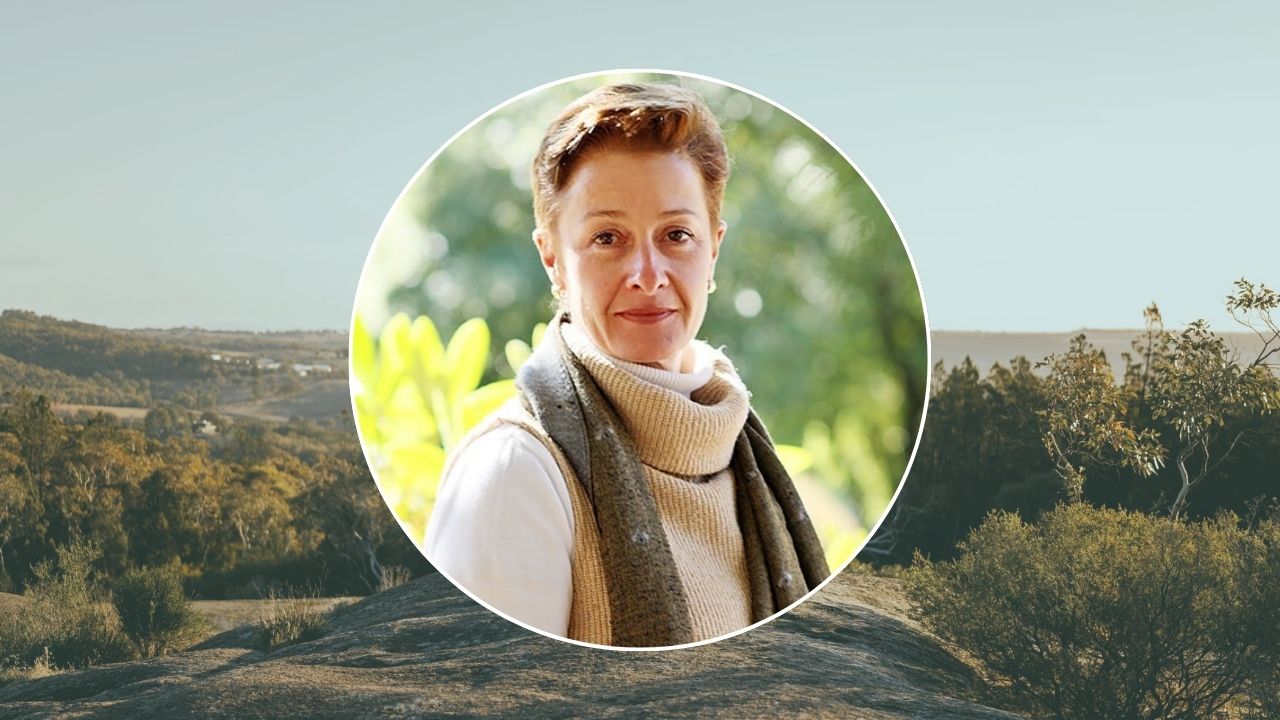

“Be bold […] Adopt cathedral thinking. What do we want in a hundred years’ time? And of course, we want vibrant, sustainable, happy, healthy communities.” — Susannah Doyle
How can destinations transform extractive heritage into regenerative tourism foundations? In Indigo Shire, located in Victoria, Australia, this transformation is happening through a bold vision and community commitment to sustainability.
Susannah Doyle, Manager of Tourism for Indigo Shire, reveals how this small regional council is leveraging Gold Rush history to build a regenerative tourism future. The area has evolved from 1850s gold mining settlements into thriving destinations for heritage tourism, world-class wine, cycling adventures, and sustainable living experiences. With over 50,000 annual users generating more than $21 million through their extensive rail trail network alone, Indigo Shire demonstrates that heritage and sustainability create powerful economic drivers.
“I think we are lucky that we have a foundation of Gold Rush, which is by definition extractive, and therefore we can show that we are flipping from extraction to regeneration. And it’s quite a persuasive story.”
The region encompasses four distinctive townships, including Yackandandah, which is leading the way in community-owned renewable energy with plans to be entirely renewable by 2030.
In the long term, Susannah envisions that Indigo Shire will expand its already impressive active transportation network and strengthen partnerships with Traditional Owners as two critical pieces of the regenerative future. Through “cathedral thinking” that considers the hundred-year impacts, Indigo Shire demonstrates how destinations can commit to regeneration holistically, moving forward in reconciliation, heritage preservation, environmental sustainability, economic development, and more.
On Travel Beyond, you’ll learn:
- How Yackandandah achieved community-owned renewable energy leadership, inspiring artisan communities and demonstrating sustainable living practices that attract values-aligned tourists.
- How Indigo Shire’s 30+ Gold Rush sites create walking, cycling, and driving experiences that connect heritage storytelling with contemporary sustainable tourism practices.
- How innovative transport solutions could transform visitor dispersal across the Murray to Mountains Rail Trail and Epic Mountain Bike Trail networks, connecting all four townships
- How strong relationships with Traditional Owners can bring cultural conservation and truth-telling into destination management planning.
Show notes
Indigo Shire Council Visitor Information — Official tourism information for the four destination towns within Indigo Shire, including events, destinations, and industry resources.
Murray to Mountains Rail Trail — Victoria’s premier 137km sealed rail trail connecting Wangaratta, Myrtleford, Bright, Beechworth, and Yackandandah through mountains, valleys and gourmet regions.
Totally Renewable Rackandandah — A 100% volunteer-run community group with the goal of powering this small Victorian town with 100% renewable energy.
Victorian Goldfields World Heritage — Background on Indigo Shire’s Gold Rush heritage sites and the upcoming World Heritage listing bid centred on Beechworth’s heritage precinct.
Yorta Yorta Nation Aboriginal Corporation — The traditional custodians of much of Indigo Shire’s country, working in partnership with council on cultural conservation, knowledge sharing and tourism development.
Episode transcript
Susannah Doyle: If I was to give advice, It would be to say, be bold, adopt cathedral thinking. What do we want in a hundred years’ time? And of course, we want vibrant, sustainable, happy, healthy communities.
Peter McCully: Welcome to Travel Beyond. I’m Peter McCully for Destination Think. On this episode, we look at travel’s role in making a better world, and we highlight leading destinations and changemakers. Our guests are taking local action that the world can learn from. They’re helping to regenerate ecosystems, communities, and economies.
They’re often making positive change happen from the bottom up. Many of the voices we’ve highlighted are part of the Destination Think Collective. A peer group of more than 20 ambitious forward-thinking destinations, working toward a better future for travel and the planet. Today we’re exploring how Indigo Shire in Northeast Victoria, Australia is transforming its gold rush history into a foundation for regenerative tourism.
Their breakthrough approach demonstrates that destinations can flip from extraction to regeneration. Indigo Shire is also leaning on its sustainable strengths. The region’s rail trail network alone generates over $21 million annually from 50,000+ users, while the township of Yackandandah leads the way in community-owned renewable energy through cathedral thinking that considers hundred-year impacts and strengthening Indigenous partnerships with the Yorta Yorta Nation. The small regional council shows how heritage preservation and environmental sustainability create powerful economic drivers.
We spoke with Susannah Doyle, Manager of Tourism for Indigo Shire, about how destinations can leverage extractive heritage to build regenerative tourism that attracts values-aligned visitors.
Susannah Doyle: My name is Susannah Doyle and I’m the manager of Tourism for Indigo Shire. We’re a local council. We have four key tourism destinations. And Indigo is partly on Yorta Yorta country, traditional custodians, and partly on country where multiple First People groups have connections. And I’d like to pay my respects to elders past and present.
Indigo is slightly unusual for a small regional council, with its significant investment in destination management. The destination management team delivers strategy, marketing, production, industry development, as well as visitor servicing and extensive cultural heritage, tourism experiences, education, programming, museum operations, and conservation and activation of our heritage sites.
Peter McCully: Susannah, for someone who’s never been to Indigo Shire, what would you say are the must-do experiences that kind of capture what makes the place special?
Susannah Doyle: Asking a destination management organization that question is, music to my ears. So the Rutherglen wineries, um, the beautiful historic wine region, but with a really bold history of innovation and the latest generation of wine makers.
Serving world-beating fortified wines. So that’s a definite must-do. Cycling is a real strength for us, especially with the Indigo Epic mountain bike trail that runs between Beechworth and Yackandandah, and one of Australia’s most loved and established rail trails, the Murray to Mountains Rail Trail running from the Murray River through Indigo Shire to the alpine areas, and so lovely recreational cycling as well as mountain biking and visiting our early Australian gold rush villages. They’re all beautifully preserved and, uh, there really is a story around every corner, and our, our communities and our artisan makers are very happy to tell you all about it.
So we have a real strength in food, wine, craft beer, and distilling, as well. Really sophisticated product that’s kind of a juxtaposition with the, the rural and country nature of our townships. So, uh, visitors find that, you know, really motivating and really interesting and enjoy the connection of meeting the people who produce the product that comes from the place.
Peter McCully: If you could bring anyone in the world to visit you in Indigo Shire, who would it be? Where would you take them? I love this question. It would definitely be Michael Palin of Monty Python fame. And, um, many people have seen his more recent television travel programs. He’s just such an incredibly engaging person.
He travels with the humour you would expect from an ex-Python member, but he’s got a real empathy and a genuine fascination for the people, um, and the places that he visits. So if Michael were to come to any one of our destinations in Indigo Shire, I would ask him to meet with, I would invite their elders to meet with Michael. And if they were willing, then I think having traditional custodians of country meeting Michael in and around Rutherglen and Lake Moodemere, which is incredibly significant to Yorta Yorta Nation, um, and discuss cultural conservation knowledge and practices. And, and I would sit and listen and learn. They’re such culturally important places across Indigo, and I think Michael would really enjoy, uh, an informal sit down yarn. And the learnings from our Elders would be astonishing.
Peter McCully: What draws visitors to Indigo Shire, Susanna, especially if sustainability and heritage preservation are important to them?
Susannah Doyle: It’s definitely the gold rush villages. They’re the landscape, they’re the backdrop for everything that people do, you know, come here to enjoy. They’re distinctly different from each other, but they all share that same level of heritage preservation. So the streetscapes, I suppose, are living history.
It is that juxtaposition again of sort of vibrant contemporary communities. artisan communities, innovative communities, and that historic backdrop that I think visitors find so appealing, they’re drawn to the quality and sophistication of the wine and the food, but also the stories of the country vibe.
It’s pretty relaxed. It’s pretty real. The people are fascinating, that depth of artists and artisans and, um, creators. So it’s the real feeling, I think, for visitors that it’s hands-on, it’s hands in the soil, that earthy reality. But with really fascinating cultural heritage to explore as well.
Peter McCully: I understand there are four main towns in your district, your area. What makes each one unique for visitors?
Susannah Doyle: Oh, wow. We’ll kick off with Beechworth because it’s the largest of our four destinations. The Beechworth is a wine region, and it’s the hub for the Beechworth wine region. It’s Granite Country. The Chardonnay is exceptional, and it’s absolutely the grandest of the early gold rush streetscapes in Indigo, and it has a National Heritage-listed Early Gold Rush Governance Precinct, which is a real draw card for Beechworth. And that is also the centre of the upcoming Victorian Goldfields World Heritage Listing, and we believe will be a World Heritage listed site shortly. It’s also famous for, or infamous I should say, for Ned Kelly, Australia’s rather celebrated outlaw. Uh, the Kelly Trials courthouse experience is another highlight of visiting Beechworth, as is the Epic Mountain Bike Trail and the Murray to Mountains Rail Trail. So cycling is also a real strength for Beechworth. Then Rutherglen, um, our second largest destination, uh, town is absolutely a vibrant wine village.
It’s all about wine. It’s one of Australia’s top-awarded wine regions. It’s the muscat capital of the world, which is a distinct and luscious fortified wine. But they produce some beautiful, innovative table wines as well. And it’s, uh, bounded by the Murray River on one side and, uh, a newly opened Rutherglen Loops wine walk cycle trail, connects town to river past Lake Moodemere, and uh, past all of the wineries and vineyards, and produces a lot of olive, beautiful olive oil and olives grown there as well. So I would characterize Rutherglen as the vibrant wine village.
Chiltern is our third town and our tiny town in the mix. It’s a beautiful gold rush streetscape. Again, lots of movies have been shot there. It lends itself as a location. Um, it has three national trust buildings. Um, and each of them tell a story of storytelling, both as the, the old printing press from the Gold Rush, newspaper to the home of Henry Handel Richardson, who is one of Australia’s great 1800s, 19th-century novelists who wrote the great Australian Gold Rush novel, The Fortunes of Richard Mahony. And Chiltern is surrounded by the Chiltern Mount Pilot National Park in the Mount Pilot National Area and National Park is aboriginal rock art.
And lastly in the mix is Yackandandah, leads the way for Indigo in totally renewable energy. It’s all done by community, for community. They’ll be totally renewable by 2030. So community-owned power. Yackandandah, as a community and as a destination, really showcases that spirit of doing it for themselves. I’m not sure if the strong artisan community: artists, hat makers, distillers, ceramicists, et cetera, led the way, or whether the totally renewable sustainability ethos attracted the artists. Hard to tell which came first, but they’re both very prevalent in the destination and community.
Beautiful tree-lined streets, country pubs, with lovely Food Street Cafe culture. And the Yak tracks, mountain bike trails all through the Stanley State Forest, so plenty going on in Yackandandah.
Peter McCully: You mentioned the Indigo Gold Trail, which takes visitors through 160+ years of gold rush history. What should some of the first time visitors know about experiencing that heritage?
Susannah Doyle: It’s more than 30 gold rush sites across Indigo, all with, um, a story to tell and, and their, and their own histories. And they’re very connected to the townships that they sit close to. The uh, the sluicing and waterworks is really what sets our gold rush sites apart from others around the world.
It’s really a collection of walking, cycling, or driving points of interest all around Indigo, interspersed with our townships, where you can have great coffee or craft beer or anything that strikes your fancy. So it’s not just the gold rush sites that you’re experiencing as you’re going to them, you’re also, um, enjoying the landscapes, and they’re pretty varied. You are passing lakes and forests of different sorts. Vineyards and different olive groves, and different sorts of landscapes and uses of land.
Peter McCully: As you’re going from site to site, I’m wondering about what seasonal experiences or festivals throughout the year might showcase the region’s commitment to sustainability and heritage.
Susannah Doyle: Our heritage festivals are a real draw card. Our Golden Horseshoes Festival dates back to the gold rush and continues to this day with a horse shod in gold, which happened in the 1800 and happens again. Um, every Easter this year tracks lots of people to Beechworth and surrounds. So heritage is front and centre.
But of course, in all of our festivals, we’re showcasing local produce. We have the High Country Hop Festival, which is all about our artisan craft brewers across the region, collecting together and showcasing their product in Beechworth. And then from sort of an agritourism or farm-to-table experience perspective, Stanley is a small village just next to Beechworth, and they have Black Barn Farm. They have berry picking, very strong apples, orcharding, and nut groves there. And with a real ethos of homesteading and sustainability and education programs being run from Stanley.
And then in Rutherglen, is, it’s – when it’s not about wine, it’s all about olives. Growing your own olives and producing, you know, extraordinary olive oil and table olives as well, winning lots and lots of awards.
Peter McCully: You mentioned mountain bike experiences and trails. I understand Indigo Shire has extensive cycling infrastructure, which connect the towns, and I’m also wanting to know about those rail trails you mentioned and the mountain bike experiences. What’s available?
Susannah Doyle: Oh, well, we’re flanked by the Australian Alps. So for road cyclists, it’s very much about the challenging climbs into the alpine areas, and then staying back down the mountain in beautiful Beechworth and our other towns. But within Indigo and connecting town to town, we have the Murray to Mountains Rail Trail. It connects Beechworth to the alpine areas, but it also connects Beechworth to Yackandandah.
And Chiltern to Rutherglen and Rutherglen to the Murray River. The rail trail is good, safe recreational cycling. Um, it follows old railway lines, and it’s nice wide, easy, sealed cycle trails. We are finding with the advent and popularity of e-bikes. But more and more recreational cyclists are using the rail trails.
And our strength is we’ve got these gorgeous towns dotted along the cycle experience and people are now going further and more frequently on these rail trails because of e-bikes and how easy it makes it for people who don’t habitually cycle but feel like doing it while they’re here.
And then we have the Epic mountain bike trail, which is a real backroads mountain bike experience. So we have a, a wealth of mountain bike trails and recreational cycling trails. And what we’re finding is that visitors are coming up and it may be that one group have mountain bikers and non-cyclists who enjoy the recreational aspect, so people can do both. You know, one group can enjoy different sorts of cycling, and all, they’re all connected by gravel cycle trails. We have a really big gravel trail network connecting all of our towns as well. And the joy of that is that it’s, it’s very much off-road, low, low-traffic use of those gravel trails. So again, safe cycling.
Peter McCully: What opportunities exist for visitors who’d like to learn about or experience sustainable living practices during their stay in your area? I know that there had been an off-grid living festival in Chiltern, and that was quite popular while it was running. How did that reflect the region’s values?
Susannah Doyle: The Off-grid Living Festival was a wonderful thing for Indigo over the last few years. It’s run its course for the organizers. However, what has shown us is that there’s a real appetite from community and from visitors for all things off-grid and sustainable. Therefore, it’s provided us with the substantiation and the rationale to really focus.
And amplify not just sustainability, but regeneration more broadly. So it’s been a really good case study for us enjoying sustainability-led experiences is now really based around the Rutherglen wineries. It, I think, can now claim to be Australia’s most sustainable wine region. The winery members of, uh, winemakers of Rutherglen are all either eco-accredited or well on their way to eco-accreditation.
I think there’s only a couple still to gain accreditation, and they’re really employing sustainable viticulture and viticulture practices.
Peter McCully: How are you working with Indigenous communities to share cultural heritage with the visitors to the area, and what experiences might be available to them? We’re very much at the trust-building and engagement phase with our, with our Traditional Owner groups.
Susannah Doyle: We are working with Yorta Yorta Nation, particularly on an MOU between, Yorta Yorta Nation and Council, which is a really exciting step forward for us, and essentially components of it are a commitment to ensuring that the benefit of any tourism, Indigenous community-led tourism, the benefit flows directly back to First Peoples, and that there’s a protection of cultural IP, and that it’s all encased in a partnership MOU.
So it’s not just about, projects and, you know, those sorts of specifics. It’s about getting the foundations right. But the intent in our destination management plan is a new destination management plan, which will take us forward to 2035, is that arts-led cultural conservation and knowledge sharing is absolutely embedded, but of course, self-determined by our First Peoples.
We have a strong gold rush and colonial history. It’s completely evident in our beautiful townships, however. The challenge and the opportunity is for us to support capacity building with Yorta Yorta as dictated by them so that truth telling and restoring can be embedded across all of our towns.
And that richer history and deeper history of country becomes far more visible. And, you know, we are really excited to be progressing MOU and partnership with Yorta Yorta.
Peter McCully: You’ve got a railway station, yet you describe Indigo Shire as remaining a self-drive destination. So what opportunities do you see for visitors to experience the region vehicle-free? And what innovative transport solutions are you looking at in the future?
Susannah Doyle: Well, we have this critical mass of active transport trails linking all of our destinations through all of the natural landscapes. So the walking trails, the mountain bike tracks, the gravel cycling trails and recreational rail trails as well.
And there’s absolutely no doubt that the challenge is, we still remain a self-drive nation, yet we have this critical mass of active transport trail. We also have a railway station on the Melbourne-Albury-Sydney line, um, and the Hume Freeway by [unknown], but the lack of regular daily public transport and transfers and pickups remains an issue for us. So it impacts community and tourism workforce as much as it does visitor dispersal. So we think that the, the double benefit of innovative transport solutions really supports investment in this area. So we’re seeking an innovative suite of transport solutions that responds to those dual challenges and the dual opportunity.
So for us, the first step is to have briefed in a trails audit project that really looks at the connections that we have and the connections that we lack. So what do we need to connect the existing trails to community hubs, be it schools or retirement villages, or, or town centres and services and amenities.
And then also, where are the gaps for our visitors who may choose to travel to Indigo by train, so that there are pickups and transfers and interconnecting town transport options as well. So we’re starting with the active transport trails. Um, we’re identifying the gaps, so the low-hanging fruit, if you like, to strengthen the community value.
And then to seek investment from transport innovators, if you like, who can utilize the trails that we have and can we extend or broaden trails so that they become really usable for different modes of transport. Let’s say we are moving from the traditional cycle or foot power to e-bikes. What is the next iteration that will encourage people to visit because it’s innovative, but will also service the community?
We think our commitment to regenerative tourism in the next 10 years that every, every resource and every investment is supporting regeneration makes Indigo an attractive investment location for these transport innovators that we require.
Peter McCully: What would you hope international visitors might learn from Indigo Shire’s approach to balancing heritage preservation with environmental sustainability?
Susannah Doyle: I think that a big, bold vision for a small regional council and our four destinations is, is the thing to take away. That, that boldness is attractive.
And a north star vision is also very attractive to government, public investment, as well as private investment. The other learning for us is that people, um, and visitors who are enriched by history are the same people who want to see vibrant regenerative communities and regenerative tourism. So there’s really strong alignment in values and behaviours between setting regenerative goals and attracting the sort of visitors that you really want who share the community ethos.
Peter McCully: Susannah, what makes Indigo Shire’s approach to sustainable tourism something other destinations can learn from?
Susannah Doyle: I think we’re lucky that we have a foundation of gold rush, which is by definition extractive, and therefore we can show that we are flipping from extraction to regeneration. And it’s quite a persuasive story.
The vision is all-important, but the story is also important in connecting it back to your place. So bold aspirations, totally regenerative tourism, and some pretty bold goals over the next 10 years. But I think the learning that we can share is that we need to get the foundations right, that measurement matrix of the balance that’s required so that we are measuring sentiment, we’re measuring carbon, we’re measuring, you know, all of our strategic imperatives are measurable and that, um, we’re specifying the direction and we can measure it, and measure how far the dial is shifting on a very regular basis. So that’s, I think, why the foundations are so critical.
Peter McCully: You’re working towards becoming an expert in sustainable tourism. What does that journey look like, and what are the key challenges that you’re facing?
Susannah Doyle: Knowledge acquisition without any shadow of a doubt globally. We’ve all been very good at building visitor economies and growing the sector in with that focus to understand what case studies and what the destination management leaders are doing globally. You know, knowledge from leaders has been really important to us and has absolutely informed this 100% regenerative focus that we have.
So initially, knowledge acquisition and then the application of that into strategy and then being able to sense check strategy back with the net, with the global network, to make sure that we are not only innovating, but we are not wasting time reinventing the wheel. We are taking the best of what others are doing and then applying it, you know, locally to our own tourism and visitor economy.
Peter McCully: What data do you track to measure success in sustainable tourism beyond the traditional visitor numbers and spending?
Susannah Doyle: This is a foundational piece for us. We need to measure capacity, so capacity audits across all of our destinations to understand where we need to go in, in building visitor capacity, carbon, so that we can measure carbon reduction as we move ahead over the 10-year new strategy period. And then also measuring a number of regenerative initiatives that are happening through public investment as well as through private investment and residential sentiment. Resident sentiment is a really important metric for us because it also starts to identify where there are capacity, perception issues, and perhaps where amenities and services need to be strengthened. So really those are the four baseline measure, measurements that we need. As well as the traditional visitor numbers, tourism jobs, econ, you know, and all the economic measurements that we use.
Peter McCully: Are there any infrastructure investments that would make a big difference in advancing your sustainable tourism goals?
Susannah Doyle: Again, I come back to the sustainable transport solutions and investment in that. We’d very much like to pilot it for the state of Victoria, if not for Australia. That requires government investment. To enable us to do that other investment really will be in establishing the Indigo Gold Trail framework as a mechanism for encouraging visitor dispersal, to ensure that it becomes both a motivator as well as a sort of a framework for dispersal. We need investment in hero product. And hero experience within that Indigo Gold Trail network for us, that moves beyond cycle and its hero walks in each destination.
And one of our partnerships with that will be with the state government’s Parks Victoria, who manage our national parks and state forest. That, and we have many of them in and around Indigo. So that becomes a key partnership as we develop these hero walks that then sit alongside our wealth of cycle trails and our drive destinations and our sustainable transport solution. Everything intersects. Everything integrates, and everything’s regenerative.
Peter McCully: As you look toward the next five to 10 years, what does success look like for Indigo Shire as a sustainable tourism destination?
Susannah Doyle: Ensuring that our visitors are really sort of demonstrating what we call the sojern effect, which means that when they’re here, whether they’re here for a day or whether they’re here for a week or weeks, they feel part of the community while they’re here, they are of the community, and that’s that shared ethos.
And we believe that the regenerative vision and the regenerative investment of resources and budget will really make that a reality because it, it attracts visitors who share our ethos. So that’s what I would like to see, you know, as sustainable tourism destinations demonstrating over the next five to 10 years, but also measurable regenerative initiatives that we see on the ground in our vineyards, with our producers. And so that’s quite agritourism-based. It’s, it’s of the earth. It’s in the earth, it’s hands in the soil. And to see that a rural area is showcasing regenerative agricultural and viticultural practices is also important.
Peter McCully: As we wrap up, Susannah, I wonder what advice you might have to give to other regional destinations who are trying to balance heritage preservation, environmental sustainability, and economic development through tourism.
Susannah Doyle: If I was to give advice, it would be to say: Be bold, adopt cathedral thinking. What do we want in a hundred years time? And of course, we want vibrant, sustainable, happy, healthy communities. And so that everything we’re putting in place now, preserving our heritage, our stories, our community connection to place, and the value that visitors attach to our place is intrinsically intertwined with environmental sustainability. And that will drive economic sustainability.
Peter McCully: This has been Travel Beyond presented by Destination Think. Our thanks to Susannah Doyle from Indigo Shire Council. To learn more about Indigo Shire’s four destination townships and their regenerative tourism initiatives, you can visit indigoshire.vic.gov.au. For more resources and show notes, visit our website at destinationthink.com.
This episode was hosted and co-produced by myself, Peter McCully. David Archer composed the theme music. Sara Raymond DeBooy is co-producer. Lindsay Payne, Amy Bjarnason, and Cory Price provided production support. If you like what you hear, please take a moment to give us a five-star rating. It helps more people find our show.
Thanks for listening, and we’ll be back with more next week.





0 Comments