

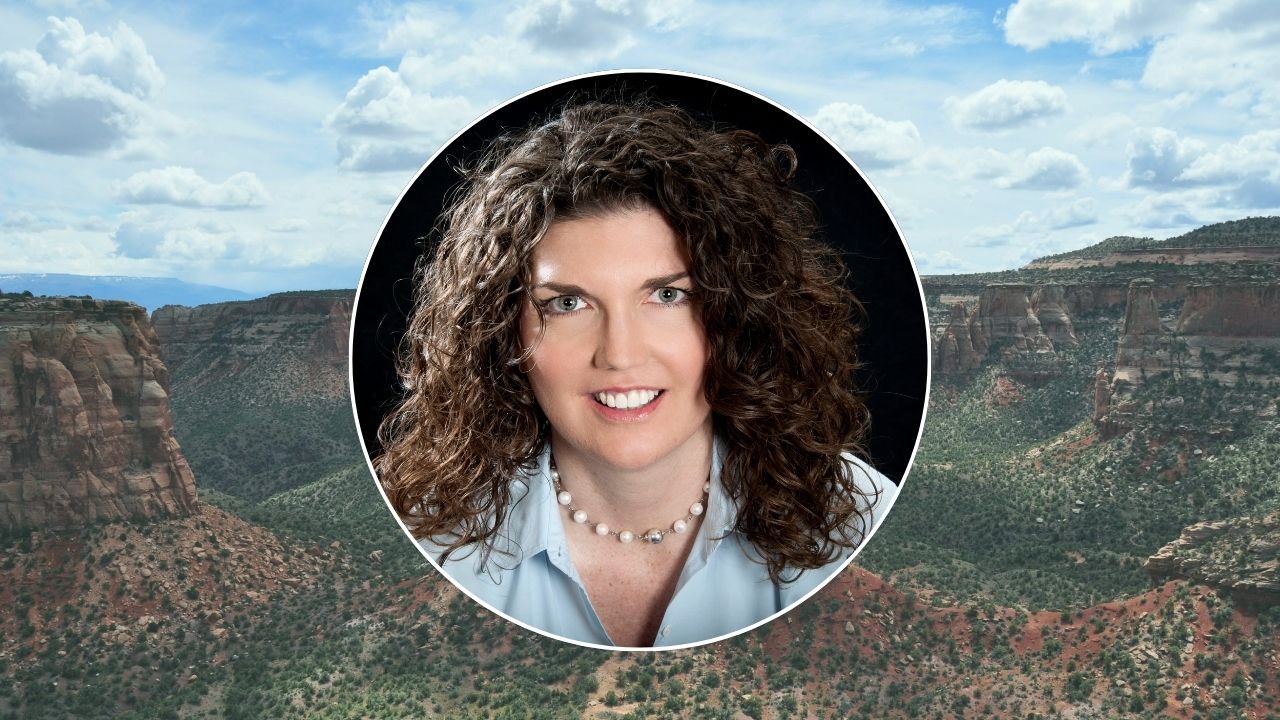

“We operate more like a data science department than a traditional DMO […] This data strategy allows our budget to be bigger than it actually is.” – Elizabeth Fogarty
What if you could prevent overcrowding before it becomes a problem? Visit Grand Junction has a strategy for that. Instead of reacting to problems after they occur, they’re using technology and community engagement to stay ahead of the curve.
Their secret weapon? An innovative Outdoor Adventure Pass app featuring 100 trails that rewards visitors for exploring lesser-known areas. Unlike traditional adventure passes, you can’t repeat the same trail, encouraging people to spread out across Mesa County’s vast public land. The result is data-driven visitor dispersion that prevents any single area from becoming overcrowded.
Elizabeth Fogarty is our guest on Travel Beyond. As the Director at Visit Grand Junction, she shares how the commitment to data science has helped the city. She also shares a recent breakthrough in the way the destination has been building its brand. Instead of hiring outside agencies, Visit Grand Junction spent two years asking locals how they wanted their home represented. Today, residents see their own words reflected in tourism materials, creating authentic ambassadorship that protects what makes the destination special.
We hear how it’s all about being proactive rather than reactive—learning from other Colorado towns that became overwhelmed and making sure Grand Junction stays ahead of the problem.
On Travel Beyond, you’ll learn:
- How the Grand Junction Outdoor Adventure Pass prevents overcrowding while rewarding visitors for exploring 100 different areas across the region.
- Why Grand Junction operates more like a data science department than a traditional destination marketing organization, allowing their budget to punch above its weight.
- How spending two years asking locals to shape the tourism brand created authentic community ownership and protection of the destination.
- Why 30% of Grand Junction’s city sales tax comes from tourism, directly funding services that benefit the 68,000 residents.
Subscribe to Travel Beyond through Apple Podcasts, Spotify, or your favourite podcast player.
Show notes
Destination Management Technology – Resources on how tourism boards are using AI and data analytics to prevent overtourism through proactive visitor management.
Overtourism Prevention Strategies – Research and best practices for destinations seeking to balance tourism growth with community wellbeing and environmental protection.
Rattlesnake Arches – The second-largest concentration of natural arches in the world, accessible via challenging hikes through the McInnis Canyons National Conservation Area.
Visit Grand Junction – The destination management and marketing organization for Grand Junction, Colorado, pioneering data-driven approaches to sustainable tourism growth.
Episode transcript
Elizabeth Fogarty: We call our public land managers and ask, are there any trails that are too busy? They chuckle and say, “Elizabeth, we’re fine.” And I say, okay, I’m gonna keep calling, because I’d rather that be the answer than we’re reacting. So let’s stay ahead of it.
Peter McCully: Welcome to Travel Beyond. I’m Peter McCully for Destination Think. On this episode, we look at travel’s role in making a better world, and we highlight leading destinations and changemakers. Our guests are taking local action that the world can learn from. They’re helping to regenerate ecosystems, communities, and economies.
They’re often making positive change happen from the bottom up. Many of the voices we’ve highlighted are part of the Destination Think Collective, A peer group of more than 20 ambitious forward-thinking destinations, working toward a better future for travel and the planet. Today we’re exploring how Visit Grand Junction and Colorado is using data science, innovative technology and community engagement to prevent overt tourism before it becomes a problem.
Their secret weapon is the Grand Junction Outdoor Adventure Pass, an app that rewards visitors for exploring lesser-known areas, including 100 trails across the region’s vast public land. This program provides data that allows the city to better understand their visitors. While helping to disperse travellers across the destination, we spoke with Elizabeth Fogarty, Director at Visit Grand Junction, about how proactive destination management prevents the overt tourism problems that plague other Colorado mountain communities.
Elizabeth Fogarty: Hi, Peter. Elizabeth Fogarty, Director at Visit Grand Junction. I’ve been here seven years and am part of the destination marketing organization team. We’re actually a department of the City of Grand Junction.
Peter McCully: Let’s talk about Grand Junction itself. What’s one thing you always take friends to do when they visit you in Grand Junction?
Elizabeth Fogarty: Without a doubt, Colorado National Monument, it’s very unexpected, partly because it’s so close to downtown. It’s just six miles from downtown Grand Junction. It’s part of the National Park Service sites, but many people don’t know about it. There’s other National parks in Colorado that get a lot of press and Colorado National Monument’s that secret in Colorado that people are surprised to see, and it’s fun to see the surprise when you take friends and family there.
There’s massive spires that jut up into the sky. There’s huge canyons with amazing overlooks as you drive up Rim Rock Drive. A lot of guests and locals call it a mini Grand Canyon to kinda give you an idea of the environment we’re in when we’re exploring. But the National Park Service calls it the heart of the world, so it’s an important and emotional place for people to visit. It’s very grounding when you see millions of years of erosion through the layers of sandstone. It’s just really grounding, and people find it really interesting from a geological standpoint as well.
Peter McCully: If you could bring anyone in the world to visit Grand Junction, who would it be and where would you take them?
Elizabeth Fogarty: I think I’d bring Anthony Bourdain. I think he had a gift for finding the heart of places, and he came from a place of the landscapes and the people, and then obviously the food and the cuisine. And that is a, a story that Grand Junction loves to tell based on the agricultural roots and history that we have here in the area.
We still have many farms in orchards, and we’re known as the breadbasket of Colorado, so we’re really surrounded by rich irrigation and farms that fueled our restaurants. And then just the history of our area and the different industries that we’ve evolved from are a big part of the roots of our community, and our residents really love that history, and they love to see that that history is honoured while we continue to innovate and progress as a community.
So I think Anthony Bourdain would see that story and it would resonate with him, and he would tell it in a way no one could, and that would be really special, I think.
Peter McCully: That’s certainly what was unique about Anthony Bourdain. Tell me about Grand Junction’s, “Nature’s Trifecta” and what makes the combination so unique in Colorado?
Elizabeth Fogarty: It’s really unique for a variety of reasons. It’s rare to have that many contrasting geographical areas in one location, so. All three can be visited within 45 minutes of Grand Junction. So as I mentioned, Colorado National Monument is really close to downtown, just six miles to the gate, and then the Grand Mesa is the largest flat top mountain in the world with 300 lakes on top.
That’s only 45 minutes. But there you see alpine forests and, obviously, every water sport you can imagine is part of the recreation aspect. And then that part of the mesa receives a significant amount of snow. So there’s the ski resort there as well. And then the third is rattlesnake arches, and it’s the second most arches in the world, second only to Moab.
And people find that. Very interesting, and it’s an unknown secret as well, so it’s not as accessible as Moab, so there’s not a good way – as much visitation. It takes a little bit of effort to get there, either by hike or four-wheel drive, like a high-rise, high-clearance vehicle. But we still try to monitor the visitation that goes there, just from a destination management standpoint.
But Nature’s Trifecta was just really unique because of those three very contrasting, very different-looking areas, and they all have their own geological history as well.
Peter McCully: For travellers who may not be familiar with the area, can you explain how Colorado National Monument, the Grand Mesa and the Rattlesnake arches create such a diverse experience all within a very close proximity to Grand Junction?
Elizabeth Fogarty: They all offer different experiences, and the other highlight of it is our high desert climate, so you can experience these areas year-round. So we have four distinct seasons, which is a little unusual for Colorado. Most of Colorado’s spring season is labelled Mud Season, and there’s not a lot to do. But in Grand Junction, our spring starts mid-March and our tulips and defiles are literally in full bloom mid-March.
So you can experience all these areas year round, whether it’s hiking, biking, horseback riding, OHVing, off-highway vehicles, all the activities regardless of the season. So it also allows people to spread out since these are, they triangulate the city, we’re framed by these three adventures that you can experience, and they all look very different.
Peter McCully: And Grand Junction has become known as one of the country’s greatest mountain biking destinations as well. What makes the trail systems there so special? And how accessible are they for those with different skill levels?
Elizabeth Fogarty: Extremely accessible. Certainly from beginner trails to expert is one of the highlights of what we’re known for.
Also, trail connectivity. There are literally thousands of mountain bike trails in the area, Grand Junction, areas within Mesa County, and it’s the fourth largest county in the state of Colorado by landmass, and 76% of that land is public land. That gives you an idea of just how big an area that is protected by public land, and it allows locals and guests to recreate on.
So the amount of trails, the trail connectivity, and the range of trails makes it really a world-renowned mountain bike area.
Peter McCully: Tell us about your Outdoor Adventure Pass. How does it work for visitors?
Elizabeth Fogarty: We started the Outdoor Adventure Pass both for residents and guests. We wanted to use gamification to align with our destination management principles, so we launched it with trails in mind, and it’s an unusual way to use these adventure passes, but we felt really strongly about our destination management strategy. So we utilized the outdoor adventure pass and put 100 trails on this pass, which, again, is really unusual. We pretty much broke the app, and the developers had to accommodate what we were trying to accomplish ’cause they believed in it too.
They thought it was a really special way to use the app. Usually the app is used for brewery tours or historical tours, which we will do as well, but we really wanted to launch it in a unique way. So there’s 100 trails on this app and growing, and it’s organized by hiking, mountain biking, horseback riding, off-highway vehicle, any mode of transportation on the trail, and you can filter it that way as well.
The gamification piece is, if the resident or guest completes the trail, then they receive points and immediately they receive gifts from local businesses, from the back end. From a strategy standpoint, we were using this as a way to spread people out throughout all of the Grand Junction area. So if we were to see a trail that is too busy, which hasn’t happened yet, because I think we are so proactive with our management strategy, we would remove that hike or that trail from the app, as well as from our website and any other materials we have. So we use it as a way to incentivize people to spread out. They can’t do the same trail more than once, and then we can monitor where people are going, how long they’re on the trail, and so forth.
Peter McCully: So were some outdoor trails or sites at risk of being overcrowded?
Is that why the program was developed?
Elizabeth Fogarty: We knew eventually this could be the case. We haven’t seen any trails be significantly overcrowded other than the typical 4th of July or Memorial weekend when everybody’s out. But we’ve learned a lot from other mountain towns in Colorado who have been in a more reactionary strategy due to overtourism and overcrowding. So we’ve learned from that, and we’ve been very proactive with our strategy, and this is just one of the ways we do it. We like the app because it’s, again, a unique way to utilize it, and locals and residents get to benefit from it and basically get rewarded for activities they’re already doing.
But they get to discover areas of the Grand Junction area that they didn’t even know existed, a trail that they weren’t aware of, or Miracle Rock, which is a thousand-ton rock balancing on this four-inch pedestal of natural rock underneath it. So things they just never knew were here, they could fit to discover on the app and then they get rewarded.
So it’s really fun.
Peter McCully: Do you have to tell us what kind of rewards they get, Elizabeth?
Elizabeth Fogarty: One of the most popular ones is a tableside Banana Foster at Devil’s Kitchen. That’s at the Hotel Maverick beautiful fourth-floor restaurant. They also get free sunglasses or neck gaiters at Adrenaline Adventures. Another one is free standup paddle boarding rentals at Grand Junction Adventures.
So the idea there is it benefits local businesses where people come to get their free. And then it allows them to talk about what their business is, and it’s another lead generation opportunity for them. And people love getting free things, so they’re happy to stop by, and then they get to learn something.
Peter McCully: What are people most proud of about Grand Junction?
Elizabeth Fogarty: I think locals in Grand Junction are really proud of how balanced we are in this community. The history of Grand Junction has been a wide variety of industries. One in particular was the oil industry, which came with a lot of boom and bust. So the community really had to grind through some difficult times, and that’s still an important industry for our area and the country, of course, but I think it created a sense of pride that residents can see through really difficult times. And now they’re really proud to see a diversification of industry happening in Grand Junction from tech to manufacturing and, of course, tourism. So I think they take a lot of pride in that evolution and that we don’t focus on any one industry too much, because they’ve lived through that.
Uh, this community’s also quite humble because of that, and they’re extremely friendly, and I think every community loves to say that about themselves, but it actually is the number one comment we get from guests. We have a social listening tool that picks up every public comment in the world about Grand Junction.
The number one comment we hear over and over from guests when they’re posting is how friendly the residents in Grand Junction are. And they literally, you’ll be walking downtown, and they look a stranger in the eye and smile and say hi, and that’s really special. And we continue to thank them for being such good, hospitable ambassadors when people visit.
And we really encourage that behaviour and reinforce how friendly they are, just to maintain that as we grow as a city. So just very friendly, very humble folk that care about one another. They also like to say it’s a little big city, so we have all the conveniences of a big city here in Grand Junction, but it’s still quite a small town.
Populations hovering around 68,000 within the city. So we’re still small as a city, but everyone still knows one another, and we all take care of one another too.
Peter McCully: What do you hope visitors can learn from their stay in Grand Junction?
Elizabeth Fogarty: I hope they see a beautiful area that has been maintained and protected, and public land that is accessible to them, and they’ve learned how to be good stewards themselves.
We do message to guests before arrival, how to be good stewards of public land. We’re also messaging that to locals, as well. A lot of people move here, and we want them to appreciate what we have here, and to protect it. So I think, aside from what I already mentioned with just appreciating how friendly our locals are, just appreciating the beautiful land that we have here and how we care for it from the agricultural land and the cattle land and how that feeds and nourishes our residents through restaurants and at local markets, they take a bit of that home and come back and visit, and we actually see that quite a bit.
People, once they discover Grand Junction, they visit time and time again. We’re not a one-and-done destination. Once they experience it, they tend to like it, and they visit and oftentimes move here because of what they experienced.
Peter McCully: Well, let’s dig into the details a little bit deeper about what happens in Grand Junction, Elizabeth, more about the Outdoor Adventure Pass.
How do you promote the pass to both visitors and locals?
Elizabeth Fogarty: All the typical places you’d think from our website, social media channels, our visitor guide, we make it very accessible and prominent. So residents and guests can either download the app or scan the QR code, and then it goes to their phone, and they can immediately start checking in at the trails that they may even already be going on, and now they get rewarded for it.
Peter McCully: And what kinds of data do you get from the past? How do you then use that information to form some of your marketing strategies?
Elizabeth Fogarty: We can see which trails they’re checking into and what time of the year, what prizes they’re choosing, what attractions they’re visiting. We use that information from a destination management standpoint to see if people are actually spreading out or discovering places they didn’t know exist.
We also share data with the businesses. So if somebody checks in for their free gift, we provide that business: Were they a resident? Were they a guest? If they’re a guest, where did they come from? And that’s really good information for the businesses as well.
And it gets them more engaged in the process and more excited to, to be a part of future passes that we’re going to build. So the data piece is really important. The other piece we’re going to launch in fall, we’re actually switching platforms to accommodate this, although it’ll be seamless from a consumer standpoint, is, we heard from our public land managers that the one data point they really needed and had no capacity, time, or money to get this data was time on trail. We started looking at platforms that did everything we were accomplishing, but also could monitor time on trail. And all this is anonymized data, but we thought it was a really valid request. And the relationship we have with our public land managers is, we really try to find solutions.
Our work is very collaborative and definitely in partnership, so we found a platform that could help us create zones around all 100 trails, and that allows us to get anonymized data of how long people are on particular trials. And some trails are loops, and some trails crossover, and that’ll provide even more information. Is there certain areas of trials that might potentially get congested or need work? And so forth. So we’re really excited about that.
Peter McCully: How long have you been running the program? Since you’ve launched it, what kind of impact has it had, and what’s the split between residents and visitors using the app?
Elizabeth Fogarty: We soft-launched the app with residents first, about three years ago. We wanted them to take ownership of their backyard and as a destination marketing organization. It’s rare for us to be able to do something exclusively for residents, right? Like, we’re not telling residents to visit Grand Junction. They’re already here. We’re talking to people outside of Mesa County.
So we were really excited that we could launch something exclusively for residents first and allow them to get excited about it, champion it, help us beta test it, give us feedback. And we also have all of the prizes delivered here from the Grand Junction Visitor Center where our offices are. So that was a great point of contact too, to get their feedback on what they liked and how could we improve it, and just see the joy that they get from the app.
And. It really took off from there. They would tell friends and family, and so at this point we have more residents utilizing it. We wanted them to own it first, and then we are entering with the new platform, we’re going to do a big push publicly on all of our more public channels, and at that point, we expect visitation from both to be 50-50 over time.
That’s really what we’re comfortable with. We want. Residents to continue to take some ownership in this app and provide us feedback, and make them feel like they are a part of our strategy and they are a part of how we manage the destination.
Peter McCully: And how did you get partners involved in the program, especially those who are offering rewards?
Elizabeth Fogarty: The locals and land managers saw the value immediately. We’ve talked about destination management for the last seven years, so when we launched this app, it was seamless for them to understand why we were doing this, and they love the idea of being rewarded for being a part of our destination management strategy.
Peter McCully: Beyond the Adventure Pass and the app, what kinds of data does the City of Grand Junction have access to when it comes to visitors?
Elizabeth Fogarty: We use so many data points. We use Tableau to organize all of them, but we have a social listening tool that pulls in every public comment. That happens in the world about our area, whether it’s about Grand Junction or the Monument or the Mesa or Rattlesnake or downtown or a particular word.
We can track anything, and that allows us to measure sentiment. It allows us to see if there’s a small group of people talking about something negative, and we can address it before it becomes viral. There’s so many ways we use that social listening tool. It’s really helpful. We can compare ourselves to our comp set, other destinations that are being talked about on public forums, and it’s not just social media.
It’s Reddit, it’s TripAdvisor, it’s blog comments, newspaper comments, reviews. Any public comment in the world, we – allows us to use that platform. So it’s one we love to – to use, and it’s a pretty dynamic platform. We also use the typical lodging data, whether it’s Star or Travel Click, which allows us to see into the future for reservations, we use attribution data to be able to track how our marketing resulted in foot traffic and, through attribution, we can pixel, and really track that. Again, anonymized data. A lot of what we do is trying to figure out consumer behaviour, and we use our data in a way where we have to create a relationship with the consumer, right? Like, data often feels sterile. We use it in a way where it’s our job to talk to the right people at the right time on the right device and invite people who would appreciate Grand Junction. We’re not trying to bring people here who don’t have an affinity for the outdoors, or for art, or history, or agritourism. So we use it more as a relationship builder and try to find the right visitor and longer length of stay and tied to our direct flights at the Grand Junction Regional Airport and so forth, and we just move them down.
The consumer funnel through retargeting, and data allows us to do that, so we operate more as a data science department. Even though we’re a DMO, we’re very little to do with the CVB or VCB as a traditional way of marketing and destination, and we’re moreso a data science department, and that allows our budget to work harder and allows our budget to be larger than it actually is.
So we have to compete against destinations that have far greater budgets. But this data strategy allows our budget to be bigger than it actually is. It brings us better results.
Peter McCully: Elizabeth, you mentioned that it’s more like a data science department. What kinds of skills do you feel that the DMO need to effectively use data and technology these days?
Elizabeth Fogarty: As far as other DMO that are interested in data-based and data science, I think we’re a good example of what you can do with a small budget and align your values internally with the team from a data-based approach. So every individual on our team – and we’re a small team of six, which is pretty small for a DMO – every position, even the visitor center manager, we all have responsibility with data that aligns itself with our position. I think we’re a good example of what you can do with a small budget and how you can afford tools that aren’t always incredibly expensive. It just takes a team who has a passion for data and how to refine that skill to produce better results.
Peter McCully: What makes Grand Junction an example that other places can follow?
Elizabeth Fogarty: I think we’re a good example from a proactive strategy standpoint. Now we’ve had the benefit of seeing much of Colorado mountain towns reactive from an overtourism, crowded standpoint. So that gave us some insight that they didn’t have.
But we’ve used that as a learning tool to be much more reactive. When I mentioned, we call our public land managers and ask, are there any trails that are too busy? They chuckle and say, “Elizabeth, we’re fine.” And I say, okay, I’m gonna keep calling because I’d rather that be the answer than we’re reacting.
So let’s stay ahead of it. And those create some great conversations.
Peter McCully: Looking down the road five to 10 years, what does success look like for Grand Junction tourism?
Elizabeth Fogarty: Success means a thriving city, whether it’s the tourism segment, or tech, or manufacturing, or higher education with the university, that we’re all growing in unison and continuing to have diversified industries in our area while also protecting the history that we have.
So that was something we heard from locals time and time again, that they wanted the history of Grand Junction to be honoured and not forgotten, and allow that story to continue. But they also wanted the city to progress and grow in a responsible way. So I think championing and honouring where we came from, continuing to protect our agriculture and grow our agritourism businesses, and then continue to diversify as a city with tourism, continuing to be a really strong benefit to our locals.
Peter McCully: This has been Travel Beyond presented by Destination Think. Our thanks to Elizabeth Fogarty from Visit Grand Junction. To learn more about Grand Junction’s gamified trail app and Nature’s Trifecta, go to visitgrandjunction.com. For more resources and show notes, visit our website at destinationthink.com.
This episode was hosted and co-produced by myself, Peter McCully. David Archer composed the theme music. Sara Raymond de Booy is co-producer. Lindsay Payne, Amy Bjarnason, and Cory Price provided production support. If you like what you hear, please take a moment to give us a five-star rating. It helps more people find our show.
Thanks for listening, and we’ll be back with more next week.


Great article on leveraging visitor data for sustainable tourism! It’s impressive how Grand Junction uses gamification to disperse visitors effectively. This makes me wonder – how do other industries utilize data-driven engagement tools to optimize user behavior? For example, in digital marketing, platforms like https://www.linkedin.com/pulse/top-igaming-ads-platforms-2026-comparison-market-overview-tbfge/ use similar principles to balance ad performance and risk across different markets. Could Grand Junction’s approach inspire innovations in other data-heavy sectors?