

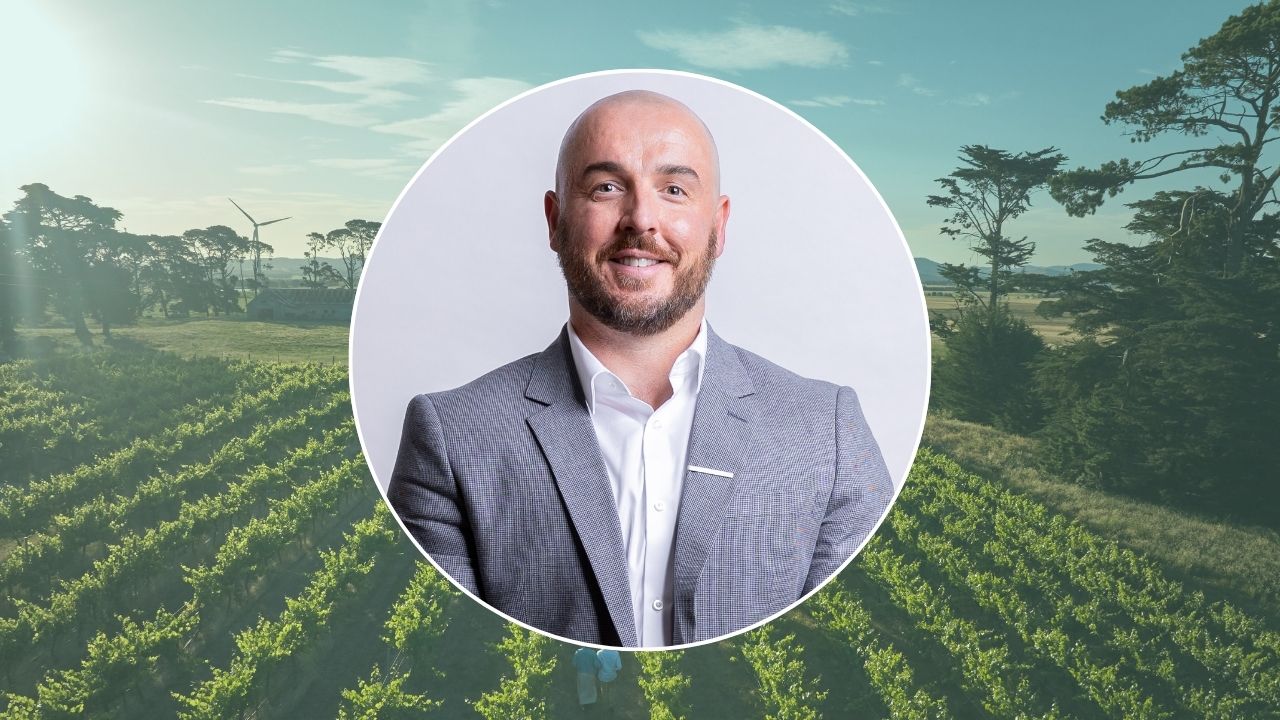
“Ballarat’s a brilliantly unexpected destination. There have been preconceived ideas as to Ballarat being that old, cold, and gold-type destination. But it’s really modern and quite contemporary now.” – Joel Chadwick
What if a destination could transform its biggest perceived weakness into its greatest strength? That’s exactly what Ballarat, Australia has achieved by embracing its chilly winter reputation and turning it into a high-demand tourism season.
Located 90 minutes by train west of Melbourne in Victoria’s goldfields, Ballarat has evolved far beyond the “old, cold and gold” stereotypes that once defined it. Through strategic winter programming, including the Winter Festival and Sovereign Hill’s Winter Wonder Lights—which attracts nearly 100,000 visitors over three weeks—the destination has successfully repositioned itself as a “brilliantly unexpected” contemporary experience with a heritage backdrop.
Joel Chadwick, Coordinator for Sustainable Destination Development at the City of Ballarat and Tourism Midwest Victoria, explains how the destination tackles unique challenges through innovative approaches. With nearly 50% of visitors coming to see friends and relatives, Ballarat created the “Ballarat in the Know” platform specifically for locals, turning residents into informed tourism ambassadors who can better showcase their region to visiting friends and family.
This conversation explores Tourism Midwest Victoria’s comprehensive approach to sustainable tourism development, from supporting local operators through carbon footprint assessments to developing Indigenous tourism experiences through partnerships with traditional owner corporations. The destination is also working to grow its agritourism sector while advocating for reduced regulatory barriers that could unlock greater tourism development opportunities.
On this episode of Travel Beyond, you’ll learn:
-
- How winter events and activations have helped this region overturn preconceptions and generate demand during slower times.
- What role traditional owner corporations play in developing Indigenous tourism experiences in the Victorian goldfields.
- How Hotel Vera plants one tree per guest as part of the region’s sustainability initiatives.
- How proximity to Melbourne by train creates both opportunities and challenges for regional destinations.
Subscribe to Travel Beyond through Apple Podcasts, Spotify, or your favourite podcast player.
Show notes
15 Trees — An Australian not-for-profit organization that plants native trees to offset carbon emissions, partnering with businesses like Hotel Vera for environmental initiatives.
Ecotourism Australia Sustainable Tourism Scorecard — A certification program that helps tourism operators assess and improve their sustainability practices across environmental, social, and economic criteria.
Sovereign Hill Winter Wonder Lights — An annual light display event at Ballarat’s outdoor museum that attracts nearly 100,000 visitors over three weeks, transforming the destination’s winter season into a peak period.
Visit Ballarat — The official destination marketing platform providing comprehensive information about attractions, events, and experiences in Ballarat and surrounding regions.
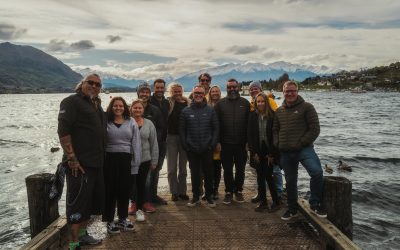
Images provided by Tourism Midwest Victoria.
Episode transcript
Joel Chadwick: A lot of our marketing positioning has been around Ballarat’s being a brilliantly unexpected destination. There have been preconceived ideas about Ballarat being that old, cold, and gold type of destination, but it’s really modern and quite contemporary now with those offerings, with that heritage backdrop in the background.
Peter McCully: Welcome to Travel Beyond. I’m Peter McCully for Destination Think. On this episode, we look at travel’s role in making a better world, and we highlight leading destinations and changemakers. Our guests are taking local action that the world can learn from. They’re helping to regenerate ecosystems, communities, and economies, and they’re making positive change happen from the bottom up.
Many of the voices we’ve highlighted are part of the Destination Think Collective, a peer group of more than 20 ambitious, forward-thinking destinations working towards a better future for travel and the planet. Today we’re talking about how one Australian destination has transformed its toughest season into a peak period in wintertime.
The city of Ballarat is located just 90 minutes west of Melbourne in Victoria’s Gold Fields, and it has evolved far beyond the old, cold, and gold stereotypes that once defined it through strategic winter programming, including the Winter Festival and Sovereign Hill’s Winter Wonderlights, which attracts nearly 100,000 visitors over three weeks.
The destination has successfully repositioned itself as a brilliantly unexpected contemporary experience with a heritage backdrop. The destination is innovating in other ways too, including Indigenous tourism experiences through partnerships with traditional owner corporations, a local ambassador programme, and the adoption of sustainable tourism indicators that track community sentiment and environmental impact alongside economic benefits.
We spoke with Joel Chadwick of the City of Ballarat and Tourism Midwest Victoria about how strategic winter programming and community engagement have created transformational change.
Joel Chadwick: My name’s Joel Chadwick. I’m the coordinator for Sustainable Destination Development at the City of Ballarat and Tourism Midwest Victoria. We are located about 90 minutes to the west of Melbourne in Victoria, close in proximity to where Melbourne’s growth corridor is, in a beautiful part of the Victorian Gold Fields.
Peter McCully: Joel, what’s one thing you always do when friends come to visit? Where do you take them? What do you show them?
Joel Chadwick: Look, it’s a terrific mix and you’ve always got to do the must-dos. One of our key attractions here in Ballarat is Sovereign Hill. Sovereign Hill is an outdoor museum that really celebrates the gold rush heritage of the Victorian Gold Fields.
It’s an attraction that has really evolved in recent times as well and really celebrates not only the colonial history of Ballarat and the Gold Fields as a whole, but really now taps back into the First Nations history as well of the region. Then it also starts to give those offerings into more contemporary offerings, but really tells that story of gold and its significance to the region.
The Ballarat Wildlife Park—you always need to get in touch with the Australian local flora and fauna. It’s a must-do. It’s located close to actually where I live, if I’ve got friends, it’s easily accessible. We’ve got an annual pass and it’s just a great one to tick off.
If it’s with a couple of my closer mates, we go and tick off some of our local craft beer scene and distilling scene here in central Ballarat. It’s really been evolving. If you want a cheeky drink, you can sit down and relax and have some really good food.
What we also offer as a destination as well is really easily accessible nature. Just a beautiful bush walk or a bike ride on one of our local trails is also something that’s very easy to do and gets you great coverage of some of the other things to see and do and points of interest within Ballarat itself.
Peter McCully: You paint a great picture, Joel. What draws people to visit, especially if sustainability is important to them?
Joel Chadwick: I just touched on our accessible nature. What we’re really doing as a region is—we’re an urbanized city in Ballarat itself, but right on the outskirts, we’re surrounded by bushland.
Really those nature-based walks and experiences are close by and in close proximity to Melburnians as well. A couple of our more advanced walks, which are based in Werribee Gorge and the Lerderderg Track, are two of Victoria’s most walked trails. They’re really easily accessible, a short drive outside of western Melbourne.
It’s just a great way for visitors to get in touch with nature. We’re a gold fields town, a city that’s been built on the gold fields, and we’re really well known for our heritage. But what we’re really looking to offer now as a destination is contemporary experiences with that heritage backdrop.
Within it, our local art gallery, our hotels, and our hospitality venues have reinvigorated themselves in beautiful old historic buildings and are now offering amazing, authentic contemporary offerings in the region. Agritourism experiences is also a big one that we’re working on.
Agritourism meaning our local producers that are producing local foods or fibres and actually offering that with hands-on experiences at their farm gate or the properties that they’re operating from as well. Berry picking, sunflower picking—we’ve got a lot of pick-your-own type experiences just outside of Melbourne in that western corridor coming up to Ballarat as well. Likewise with our local wineries that are also very close by, plenty to offer when it comes to that.
Peter McCully: Where does the name Ballarat come from, Joel?
Joel Chadwick: Ballarat actually means resting place, which is great when it comes to tourism, in Wathaurong language, as said by our traditional owners.
Resting place is what it stands for. It was actually originally spelled with the double A. One of the As dropped out back when there was an amalgamation of local government areas. I think it was to save confusion. Ballarat is still spelled with the double A within that.
Peter McCully: If you could have anybody in the world come to visit you in Ballarat, who would it be and what would you do? What would you show them? Where would you take them?
Joel Chadwick: David Attenborough. The reason for that is I think we’d come up with a really extensive itinerary that showed the absolute breadth of all offerings that Ballarat and the region has to offer, from our creative energy type experiences.
As I’ve touched on, our artisans, our growers, our producers within the region, aspects of people in place—our First Nations history, our first peoples’ history, our art galleries and creative scene that’s emerging. A little bit of nature, of course, with David Attenborough included. What we would actually get him to do is narrate it as he took him around.
We could record that as well. I think it would be just an amazing experience having him in the region and someone that’s extremely well respected.
Peter McCully: What are the locals most proud of about Ballarat? What are their values?
Joel Chadwick: We’ve got a lot of community pride here in Ballarat. What they’re really proud of is our extensive events calendar.
Our modernizing hospitality scene—it’s really evolved in the last five to 10 years and we’ve got a lot of contemporary offerings that are really seeing that as an emerging scene and something that our locals also are strong supporters of. We’re really well known for the heritage aspects to the region.
That’s something that our locals are very proud of us as a regional destination, and our locals like to show off about. I think their values are they like the regionalization of us as a destination, but we still have all the amenities that a city brings.
We’ve got a little bit of everything. I think that’s something that our locals are very proud of showing their visitors when they come.
Peter McCully: You mentioned you’re about an hour from Melbourne. From a visitor’s perspective, what makes Ballarat unique compared to some of the other regional Victorian destinations?
Joel Chadwick: I think we bring many layers. What we’re looking to focus on is creating that distinct cultural offering with that offbeat charm that really entertains people with a lot of brilliantly unexpected moments. A lot of our marketing positioning has been around Ballarat being a brilliantly unexpected destination.
There have been preconceived ideas about Ballarat being that old, cold, and gold type of destination. But it’s really modern and quite contemporary now with those offerings, with that heritage backdrop in the background. What we’re finding is our visitors are leaving very surprised, uplifted, and inspired to return once they’ve been here because they haven’t been able to tick off everything that they wanted to do once they got here and realized how much was on offer.
Peter McCully: Your destination has had some success attracting visitors at all times of the year. Are there annual seasonal events that both the locals and visitors can look forward to planning around?
Joel Chadwick: We’ve got quite an extensive events calendar, and that’s made up of leisure, creative, cultural-type events through to sporting events.
What we do have is an amazing set of sports facilities as a regional destination, and then also our business and corporate events market as well that we are really doing some work on. In terms of staples in the annual calendar, we have our annual Ballarat Begonia Festival in March that takes place every year that attracts over 60,000 visitors.
We have the Ballarat Heritage Festival in May. The Ballarat Winter Festival takes place throughout June and July, which then complements the Sovereign Hill Winter Wonderlights. That’s their annual significant event that gets close to 100,000 visitors into the region over a three-week period.
We then have some more fun-type activations, like Ballarat’s Best Pie Competition. They’re really tactical marketing pieces, but they’ve also become established events in the annual calendar that not only visitors but our local industry look forward to participating in.
We have a number of arts and cultural events that I touched on, but one of significance is the Ballarat International Foto Biennale. It happens every second year in September, October. Our art gallery has an extensive exhibition programme that brings all types of artists and world-renowned artists into the region and is really smack bang in the middle of the centre of town and something that not only locals but visitors really enjoy once here.
I touched on our sporting events. We host national-level events here. We host a couple of Australian rules football games here at Mars Stadium. We have national basketball events, we have national soccer events, we have national netball events that all take place here as well.
They’re really important pieces to making sure that they are supporting the visitor economy on the whole through accommodation, hospitality, and all other means of the visitor economy as well.
Peter McCully: It sounds like the events and festivals have really evened out some of those traditionally more quiet periods or times of the year.
Perhaps you could talk further about some of the opportunities for visitors who are interested in cultural and heritage tourism.
Joel Chadwick: We’re based in the heart of the Victorian Gold Fields, which obviously brings a lot of the heritage aspects and experiences to the city that are readily available to our visitors.
What we’re doing as a destination in terms of both enhancing and developing those experiences into the future is really focusing on the three or four layers of both our culture and heritage experiences. I’ve touched on our first peoples’ culture and heritage and really celebrating that particular heritage, but working with our traditional owner corporations and elders to develop those stories and make them readily available and be able to be interpreted more than what they currently are. That’s something that we are strategically working with those corporations on.
Our colonial heritage—I’ve touched on Sovereign Hill. Our Art Gallery of Ballarat is in one of the most beautiful historic or heritage-type buildings in the middle of Ballarat. A lot of our food and drink experiences are down beautiful heritage laneways and in beautiful red brick, Victorian-style buildings that take place as well.
They’re really complementary to the overall scene itself. As I touched on, we are really trying to develop those contemporary offerings in the heritage backdrop, celebrating contemporary experiences with that heritage there and trying to interpret what that heritage means or the significance of that heritage there as well.
We’re actually part of a bid with a number of other local government areas here in Victoria for the Victorian Gold Fields to become a World Heritage-listed region. There’s been a lot of work that’s been going into that over the last 12 to 15 years now. It’s been quite some time and a lot of master planning that’s just been done in the last two years now that is really looking to the opportunities of what that might bring and the tourism opportunities that might bring. There’s a whole layer that covers off through the master plan. We’re hoping that the bid will at least be listed or at least prioritized to be listed in the next 12 to 24 months through the work that that particular working group’s been working on.
Peter McCully: Joel, we talked about Ballarat being an hour to Melbourne on the train. What opportunities has being that close to Melbourne brought to Ballarat?
Joel Chadwick: I think the obvious one is obviously our connectivity and accessibility, being around an hour and 15 minutes by public transport out of central Melbourne.
Southern Cross Station is the station in Melbourne that gets everyone out into the regions. The opportunities that has brought is cheap public transport travel for families but then also for our commuters for our local community as well. It actually works both ways. Ballarat’s also being seen as a city that’s quite connected or at least accessible to Melbourne. What we’ve seen as a result of COVID is a lot of Melburnians actually move up to cities like Ballarat or at least in that western corridor to actually live.
It’s actually brought that liveability factor to the region through that connectivity. We’ve seen an increase in population growth as a result. The world has changed since COVID and hybrid ways of working are now in place. Workers that are now able to work in the city two to three days a week can then work from home, from their home study or office here in a regional location.
It’s really brought that locals’ benefit and population growth benefit to the city as well, but really easy access for visitation as well. What we’ve seen is it makes it a really easy day trip to the region. But what that also means is it creates a job for us to obviously try and convert that to overnight stays by making sure that we’re marketing and showing those particular visitors that there’s more to see and do and that it does require an overnight stay while they’re here.
Peter McCully: Speaking of marketing, Ballarat has a moderate oceanic climate with cool winters and warm summers. How do you market, we’ll call it the winter experience, particularly given that Ballarat has a reputation for chilly winters?
Joel Chadwick: Ballarat is definitely a winter-type destination, and what we’ve actually been able to do as a result of owning it is turn that into what is really our peak period on the annual calendar.
We’ve been able to do this through some of our high-profile events that take place at that particular time. I mentioned before the Ballarat Winter Festival. What we do is deck out the CBD with a number of activations that take place. We bring in a temporary ice rink into the centre of town.
We do a number of other activations. This year we’ve done Ballarat’s Hot Chocolate Trail—just winter warmers, cosy-type experiences that are on offer. It’s the simple pleasures that bring people in to really undertake activities, particularly throughout the school holidays, to really celebrate what is a chilly time of year but obviously trying to get the warm and fuzzy moments underway inside in some of our local establishments as well.
The other aspect to that is one of our key events from one of our key operators, Sovereign Hill’s Winter Wonderlights. That’s where they basically activate or light up their entire outdoor museum with a light display or show, probably what it’s best described as, through light projections onto basically their streets, streetscape within the venue itself. It’s really marketed quite hard into some of our key markets in Melbourne. They’re getting close to around 100,000 visitors this year as a result of that three-week activation as well.
That obviously supports every visitor economy through accommodation, hospitality, and other spin-off effects with people travelling up. It’s a nighttime experience, obviously, if they’re travelling, they generally will need to stay as a result of coming along to that particular event as well.
It’s one that really supports all local venues, and the Ballarat Winter Festival and Sovereign Hill Winter Wonderlights really complement one another within the events calendar. We market that really hard into our key audiences to ensure that it continues to be a peak period for us on the annual calendar.
By comparison, while we may be chilly, we are nowhere near as chilly as other parts of the world, like Scandinavia. We’re not necessarily snow-affected. Pop on your nice puffer jacket and come up and enjoy some of the experiences that we have to offer.
Peter McCully: Joel, what’s one thing you hope travellers take away from the story of Ballarat?
Joel Chadwick: From our point of view, it’s really that Ballarat has whatever you tend to be looking for. Whatever you expect, you’ll always find something here in Ballarat that will appeal to your taste. We really hope it highlights the essence and values of our personality in terms of how we market the region, how we really want Ballarat to be seen, or when visitors leave.
We really hope they understand who we are rather than what we’ve got. Bringing that community pride aspect out into our visitor experiences is something that we’re really keen to see into the future and really hope that showcases our diverse, vibrant, creative, and cultural scene.
Peter McCully: This has been Travel Beyond presented by Destination Think. Our thanks to Joel Chadwick from the City of Ballarat and Tourism Midwest Victoria. To learn more about Ballarat’s winter tourism initiatives and the Winter Wonderlights, go to visitballarat.com.au. For more resources and show notes, visit our website at destinationthink.com.
This episode was hosted and co-produced by myself, Peter McCully. David Archer composed the theme music. Sara Raymond de Booy is co-producer. Amy Bjarnason, Lindsay Payne, and Cory Price provided production support.
If you like what you hear, please take a moment to give us a five-star rating. It helps more people find our show. Thanks for listening, and we’ll be back with more next week.




0 Comments