

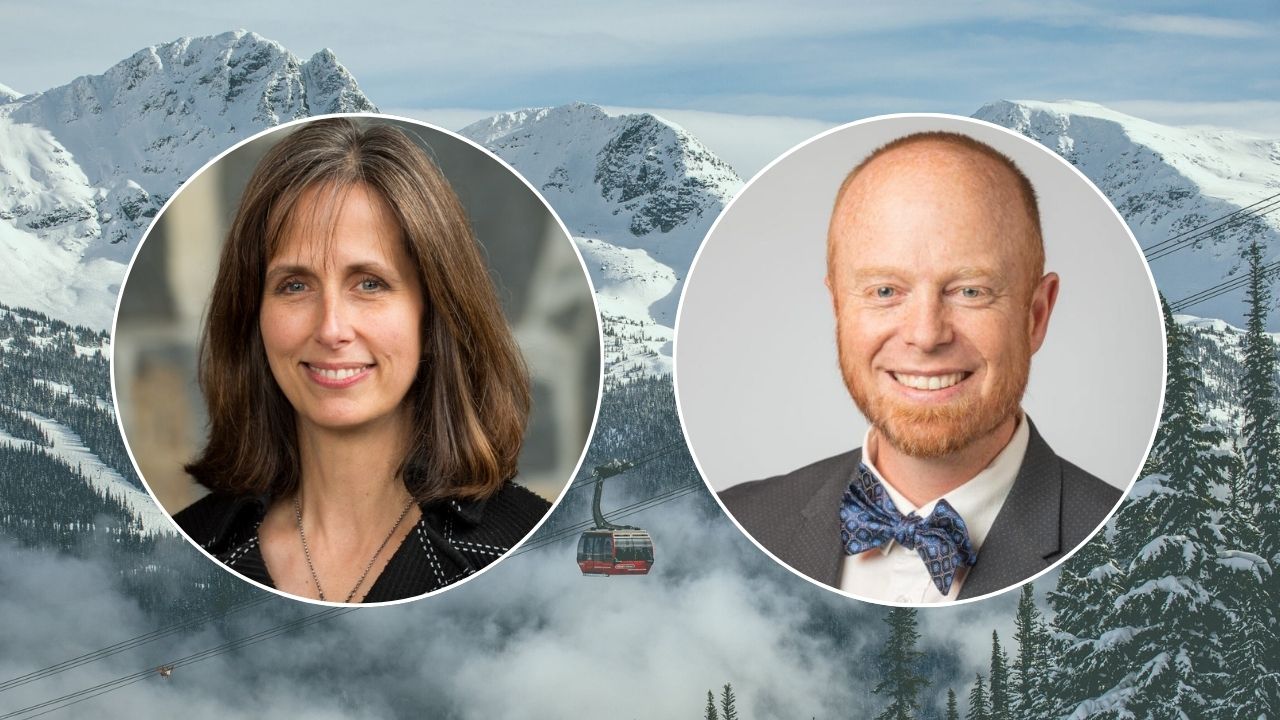

“Whistler works very hard to ensure that a minimum of 75% of our workforce live in Whistler… we actually see closer to 80%.” — Barrett Fisher
The world-renowned ski destination in Whistler, British Columbia is demonstrating how collaborative housing solutions energize communities, culture, and the tourism industry. Barrett Fisher, President & CEO at Tourism Whistler, and Mayor Jack Crompton reveal how this resort municipality achieved something remarkable: 80% of workers actually live where they work.
This conversation explores Whistler’s secret sauce—its mountain culture powered by youthful exuberance and local workers. The vibe stems from a foundational principle established in the 1990s, after it was noticed there were few children in Whistler because workers lived 45 minutes away.
What has happened since is an inspiration at a time when affordable housing seems to be in short supply almost everywhere. The Whistler Housing Authority was created in 1997 and now manages over 7,500 affordable bed units. Along the way, a decommissioned landfill that became Olympic athlete housing was converted into thriving worker communities. Through today’s collaborative funding models, Tourism Whistler has committed $2.4 million from hotel taxes toward housing development.
The municipality’s toolkit includes removing red tape, leveraging municipal lands, and encouraging private sector housing development. Most importantly, they’ve maintained their 75% target for workers living in town—creating a “robust community of people who have time to coach their kids in soccer and to get up on the hill to ski,” says Jack Crompton.
This episode, you’ll learn:
- How Tourism Whistler’s $2.4 million hotel tax contribution leverages municipal and government funding to create affordable rental and ownership housing
- What makes Whistler’s Housing Authority model effective for managing over 7,500 affordable bed units in a town of 14,000 people.
- How Whistler’s “people who work here should live here” philosophy maintains mountain culture while managing resort destination growth.
Subscribe to Travel Beyond through Apple Podcasts, Spotify, or your favourite podcast player.
Show notes
British Columbia Short-Term Rental Registry — The provincial legislation helping resort municipalities like Whistler convert illegal vacation rentals back to worker housing.
Cheakamus Crossing — The former Olympic athlete housing community built on a decommissioned landfill site, demonstrating how major events can create lasting worker housing legacies.
Resort Municipality of Whistler — The local government implementing innovative housing action plans and municipal tools to ensure 75% of workers can afford to live in town.
Squamish Lil’wat Cultural Centre — The Olympic legacy cultural facility showcasing the partnership between Squamish Nation and Lil’wat Nation that enriches Whistler’s authentic mountain culture.
Whistler Housing Authority — The municipal housing operator managing over 7,500 affordable bed units through rent-geared-to-income rentals and covenanted ownership programs.
Episode transcript
Barrett Fisher: Whistler works very hard to ensure that a minimum of 75% of our workforce live in Whistler.
Jack Crompton: They say the best time to start good work is 30 years ago. The second best time is today.
Peter McCully: Welcome to Travel Beyond. I’m Peter McCully for Destination Think. On this episode, we look at travel’s role in making a better world, and we highlight leading destinations and change makers. Our guests are taking local action that the world can learn from. They’re helping to regenerate ecosystems, communities, and economies.
They’re often making positive change happen from the bottom up. Many of the voices we’ve highlighted are part of the Destination Think collective, a peer group of more than 20 ambitious forward-thinking destinations, working toward a better future for travel and the planet. On today’s show, we’re discussing tourism, housing, and community cohesion in Whistler, British Columbia.
Whistler demonstrates something remarkable in the resort world. 80% of workers actually live where they work. This world-renowned ski destination has created over 7,500 affordable bed units through collaborative partnerships between municipal government, tourism organizations and private developers.
This approach stems from a foundational principle established in the 1990s when community leaders noticed that other resort towns had few children because workers lived 45 minutes away, commuting daily to jobs they couldn’t afford to live near. Whistler’s response included transforming temporary Olympic athlete housing into permanent worker communities, establishing the Whistler Housing Authority as an affordable housing operator, and creating innovative funding models where Tourism Whistler has committed to contributing millions from hotel tax revenue toward housing development. We spoke with Barrett Fisher, president and CEO of Tourism Whistler, and Jack Crompton, mayor of the Resort Municipality of Whistler, about how collaborative housing solutions preserve destination character while ensuring sustainable growth.
Barrett Fisher: My name is Barrett Fisher. I’m the president and CEO of Tourism Whistler, and I’m responsible for overseeing both the destination tourism organization, in addition to managing and operating the Whistler Conference Centre, the Whistler Golf Club, Whistler.com reservations, and the Whistler Visitor Centre. I am pleased to be coming to you from the shared traditional territories of the Squamish Nation and the Lil’wat Nation.
Peter McCully: Barrett, before we get into housing, let’s talk about the unique kind of place that Whistler is. Whistler is famous for being a ski resort. We wonder how the Whistler experience has been changing in the last couple of decades, especially since the 2010 Winter Olympics.
Barrett Fisher: Yes, Whistler began as a regional ski destination in the mid-sixties, and it was really coming into its own as an international ski destination by the two thousands. But yes, it was the 2010 Olympic and Paralympic Winter Games that certainly put Whistler on the global stage. Interestingly, when the resort was being developed, it was actually done with visions of hosting a Winter Olympic Games.
It took five failed attempts before Whistler’s dream actually came true, and Whistler and Vancouver successfully hosted the games in 2010. In addition to winter, Whistler really has continued to grow as a summer destination: hiking, biking, golf, mountaintop sightseeing, as well as a conference destination in both spring and fall.
Looking at the Olympic Games and the global awareness that we saw as a result, it also helped with Whistler becoming a major host for events. If we could host the Olympic Games, we could host signature events. We were really able to attract events like Tough Mudder, Ironman, Gran Fondo as a few examples. Another major legacy that really came out of the games was the coming together of the Squamish Lil’wat Cultural Centre. That is an incredible partnership between our Squamish Nation and our Lil’wat Nation and a unique cultural facility. We were also able to attract the Audain Art Museum, which has world-class art, as well as the building of the Peak 2 Peak Gondola.
These are all very iconic attractions. One final tidbit that’s worthy of mentioning: Whistler Mountain actually turned 60 years old, and the incorporation of the Resort Municipality of Whistler also occurred 50 years ago, with lots to celebrate.
Peter McCully: Barrett, specifically, can you paint a picture of what makes Whistler’s mountain culture unique compared to other ski destinations around the world?
Barrett Fisher: I think that Whistler’s always attracted pioneers and visionaries and entrepreneurs and risk takers—really people who are passionate about conquering the mountains, but just as passionate about bringing their dreams and their big ideas to life. The mountains have always been the magnet, but there’s an electric hum, a youthful exuberance or a celebratory vibe that visitors describe when they visit Whistler.
A lot of that energy comes from the young workforce who live, work and play here within the resort, whether that’s skiers or snowboarders or mountain bikers, hikers, artists—all who are passionate about the outdoors and are drawn to the mountains. Really, the people who come here have an adventurous spirit. They’re up for anything, no matter what their age. When we took all that research and we summarized it, we had these six pillars, and it was really: life is for living; badass and world-class are not mutually exclusive; we play in, therefore we must protect our natural environment; our community is key; our culture is critical; and our youth are even more critical. Taking all that, we boiled it down into the brand essence of Whistler, which was about thrill. Our positioning is “thrill runs deep.” Taking that a step further with our heightened focus on destination stewardship, our positioning is “thrill runs deep, commitment runs deeper.”
Peter McCully: Well, Barrett, how would you describe the energy and the celebratory vibe of the village to someone who’s never been there?
Barrett Fisher: Whistler Village is a central pedestrian-only gathering place, and it’s located at the base of both Whistler and Blackcomb mountains. It’s made up of meandering brick walkways, lined with restaurants and shops, trees and gardens, benches and flower baskets, outdoor patios and music, and twinkling lights throughout the winter.
Residents and visitors engage in the village experience no matter what their age or income. Friends and family gather in its vibrant, welcoming, down-to-earth atmosphere.
Peter McCully: You mentioned that our community is our soul and our key differentiator in Whistler. What does that actually look like when visitors experience Whistler?
Barrett Fisher: When visitors come to Whistler, they engage with the locals in the community. The employees that our guests actually interact with on the mountain and in our local shops and restaurants are the same employees who live and play here. They’re skiing on the mountains, they’re dining in the restaurants, their kids go to the high school here or the elementary school.
Having that local resident in the heart of our village experience, our mountain experience, really gives soul to this place. That’s what visitors experience when they rub shoulders with the locals. Interestingly, our team is working on a new video series called Cultivating Community, to give you some further insights.
Peter McCully: What are some of the destination’s greatest challenges given its popularity?
Barrett Fisher: I think you mentioned earlier, as destinations become more popular with growing demand compared to static supply, real estate costs increase and it puts it out of reach for a lot of our young people.
I would say that affordable housing and regional transit, specifically to and from our neighbouring communities of Squamish and Pemberton, have probably been our two biggest challenges. The good news is our municipality, the mountain operators, and private developers have all been doing an amazing job investing in affordable housing—both rental housing for our frontline workers, but also purchase housing for young families.
Another nuance to this, which has been challenging, is with the growth in popularity of independent-owned nightly vacation rentals. We did start to see homeowners who have houses that are located in residential neighbourhoods start to put their inventory—their secondary rental suites—out for nightly rentals, and that can be challenging because it basically means that there’s less accommodation for our employees. Whistler has zoning and business licence requirements that ensure tourist accommodation in some areas and residential areas in others. But the Province of British Columbia recently put in place legislation where independent rentals must have a provincial registration number and they must be part of this registry if they want to advertise on vacation rental platforms. As a result, legal rentals are receiving their registration numbers and illegal rentals are not. It’s still too early to know, but we are hopeful that these secondary suites in residential neighbourhoods will then again be rented out to local employees.
Just circling back to transit: Whistler does have excellent transit within our community, but work is being done with our provincial government to increase regional transit with our neighbouring communities.
Peter McCully: Like many smaller tourism-based communities, Whistler needs to attract employees from outside to work there. Where do your employees come from?
Barrett Fisher: Whistler does have local employees—people that are born and raised here in Whistler and adults who live here. But our local population is small, mighty but small. We do attract employees from all over the world, certainly from within Canada, within our own backyard, British Columbia, as well as Ontario and Quebec.
But we also have a large percentage of employees who come from Australia, the UK, from China, Japan, and the US. Interestingly though, when the pandemic hit and our national and international employees needed to return to their home countries, we really had to start from ground zero again because when the pandemic was over, we were still finding that we were struggling with our employee base.
Tourism Whistler worked closely with our Whistler Chamber of Commerce and the business community, and we rolled out a workforce recruiting program to really attract our employees back. That was actually new for us. It was part of our role getting into destination management.
Peter McCully: Barrett, you mentioned that youthful exuberance was determined to be a key part of Whistler’s identity. I’m looking for a concrete example or two of how that shows up in daily life in Whistler.
Barrett Fisher: There’s both the literal and the figurative. Literally, Whistler works very hard to ensure that a minimum of 75% of our workforce live in Whistler. We actually see closer to 80% of our workforce that live here, and that’s important for the youthful exuberance that we actually have our local workers rubbing shoulders with our visitors. Then figuratively, our visitors, whether they’re seven years old, 27, 47, or 77, are attracted to that youthful exuberance and that energy here, and they say it really brings out the best in them. We see comments in our surveys that talk about that—when they come here, they feel the fountain of youth, or it makes them feel young and alive.
Using a specific example though, to your question, we recently hosted Crankworx. It’s a big mountain biking festival and it attracts athletes from all over the world. It also attracts a huge volume of spectators who watch the performances at the base of the mountain. When I walk through the crowds and check out who’s there and who’s visiting, it’s a huge range. You’ve got young people attending with their friends. You’ve got families both with young children and grown children. You’ve got mature couples and grandparents too. The event is a great example—it’s inspirational for some of our attendees, and it’s aspirational for others. But what makes everyone have that in common is that they have a similar ethos or they have similar beliefs, and that’s their love and their passion for adventure and the outdoors and the mountains.
Peter McCully: Tourism Whistler contributes a portion of its hotel tax towards housing, even though it’s not part of the organization’s mandate. Could you tell us how that idea came about and how specifically it’s being implemented?
Barrett Fisher: Tourism Whistler and the Resort Municipality share a hotel tax. It’s collected from visitors and that funds tourism programs such as festivals and events and marketing and sales. Historically, only the hotels and condominium hotels collected the provincially legislated visitor tax, but in late 2018, the provincial government started to request that the independent vacation rental owners also collect the tax. It was at that time that the province decided that those funds could be used for the traditional tourism marketing programs and projects, but they could also be used for employee housing.
These were discussions we had at our board table. We know that Whistler has a challenge when it comes to housing. In its first year of full collection, Tourism Whistler contributed 100% of this incremental tax towards employee housing. In the years following, Tourism Whistler had other funding responsibilities, including upgrades to the Whistler Conference Centre, and we took a hiatus. But then coming out of the pandemic, we did have a surplus. In 2023, after discussions at our board table, there was an agreement that we had this need for greater affordable employee housing. Tourism Whistler made a five-year commitment to invest a portion of this incremental funding towards housing.
Just to give you some context to that, at the end of our five-year commitment, Tourism Whistler will have invested about $2.4 million towards housing, which, to be perfectly frank, on its own is not a huge amount of funding to support apartment complexes. But when it’s leveraged against the municipal funds and it enables us to access larger funding grants and loans from provincial and federal governments, then that makes it go a lot further.
While it’s not specific to Tourism Whistler’s mandate, investment into housing, along with labour recruitment campaigns, these are examples that fall into this new expanded destination management role that DMOs are taking on.
Peter McCully: What feedback are you getting from tourism businesses about the use of the hotel tax towards helping with housing?
Barrett Fisher: For the most part, our businesses support this direction because they too are challenged with needing employee housing, and they recognize that these funds are helping to make these projects happen. But they also want to make sure that Tourism Whistler does not move away from our core purpose, noting the many ongoing uncertainties that the tourism industry continues to face, whether that’s economic, political, climate or health challenges. Our businesses want us to be balanced in supporting the economic, the social, and the environmental needs of tourism.
Peter McCully: Barrett, what’s one thing that you hope travellers or visitors take away from this story today?
Barrett Fisher: I think just that Whistler is a beautiful, adventurous, international and welcoming mountain destination. We care a lot about our community. We’re deeply committed to social wellbeing and environmental preservation, and we encourage our visitors to be equally as passionate and respectful of this place and our people.
Peter McCully: Last question, Barrett. Is there any advice you’d like to share with other destinations?
Barrett Fisher: The Whistler Housing Authority provides an excellent model for destinations to consider when they’re looking at the development and management of affordable employee housing. That’s certainly something that we would be happy to share on how ours works and how we can continue to share our insights and knowledge.
Peter McCully: Barrett, thanks for your time today. We really appreciate it.
Barrett Fisher: Thank you very much, Peter. It’s been my pleasure.
Peter McCully: Now we welcome to the podcast, Mayor Jack Crompton of the Resort Municipality of Whistler. Let’s talk about affordable housing. Could you explain the different tools that the municipality has at its disposal to help influence the creation of more affordable housing in Whistler?
Jack Crompton: Sure. I feel incredibly fortunate to be mayor of Whistler at this time because there’s been so much work put into housing before me. In a lot of ways, I am the beneficiary of some pretty incredible tools dreamt up and delivered by some pretty amazing people. The Whistler Housing Authority is our affordable housing operator. They own rental housing, and they administer our affordable ownership inventory. Then our Whistler Development Corporation builds affordable housing and develops land for affordable housing. Those two are wholly owned subsidiaries of the municipality who do that work every day, delivering for residents.
Then recently, in the last municipal election, council was given very clear direction by this community, which was: you have more work to do on housing. We developed our housing action plan, which is giving the municipality and the community direction about what is next for us. We’ve come up with six tools in that work.
The first being removing red tape barriers around permitting, making it quicker to build affordable housing. Monitoring the housing supply and identifying needs in our community—lots of data analysis about what matters to people and how they want to be housed. Third, protecting and optimizing employee housing supply. We have a lot of existing housing supply that we want to make sure remains affordable and available. Fourth, leveraging municipal lands for housing. We have land that we want to put to work and make sure it houses people. Fifth, utilizing and expanding our financing tools. We have tools that we’ve developed in the past, and we want to innovate and come up with new ways of paying for affordable housing. Finally, encouraging the private sector to develop housing, which is an exciting reality for our community, where developers have seen that there is an opportunity for them to be building housing that would be affordable for residents to live in. Our two subsidiaries, the Whistler Housing Authority and the Whistler Development Corporation, and then our housing action plan, are giving a lot of direction to where we go from here.
Peter McCully: It sounds very ambitious. What has been the most successful or effective program at this point?
Jack Crompton: I’m not sure I can point to one program that’s been the most effective, but I think an idea has been the most important for us. A group of Whistler residents toured Colorado in the nineties. They went on a benchmarking trip to understand what was happening in other communities, and one of them noticed that there weren’t any kids in a lot of these resort towns, and they started to ask themselves why.
Over a couple of days, they learned that in a lot of these resorts and in resorts around North America, many of the workers live 45 minutes down valley. They spend an hour and a half of their day commuting in and commuting out, and there was a recognition then by those people that we need a community that lives in town, that calls Whistler home.
They set a target of 75% of Whistler workers living in town, and then they got to work on it. From that came the Whistler Housing Authority, the Whistler Development Corporation, and all of our thinking around what we do on housing. We want to have a community that’s robust, a community of people who have time to coach their kids in soccer and to get up on the hill to ski and enjoy why they moved here.
If there’s one particular thing I could point to, it’s that idea—that idea that Whistler residents who work here should live here, and let’s hit 75% of our workers living in our town.
Peter McCully: Jack, you mentioned that there’s been a lot of work done on housing since 2016. At that time, there was a goal of 1,000 additional bed units set. My question is, how many of those bed units have been created to this point, and is that still the goal? Or to use a hockey analogy, have the goalposts moved?
Jack Crompton: We’ve hit 1,500, and we have about 800 now in process. We’ve hit the number, but for me and for council, it’s not good enough. We’re pleased with what we’ve been able to deliver. We’re pleased about hitting that target, and we’re really focused on growing the number of units for our community. Whistler’s an expensive place to live, and if you want to have a family here, we’ll need to build more of those affordable units. We’re really focused on exceeding that target, which we’ve done, but we want to do even better.
Peter McCully: I’d love to hear about some of the success stories in creating rental and for-purchase accommodation at Whistler. Perhaps you have some examples for us.
Jack Crompton: There are moments in the history of a town that mark those communities, and for us, a big one—and I probably don’t have to tell anyone who’s listening to this podcast—but it was the 2010 Olympics.
When it was announced that Whistler had been named as the host mountain town for the 2010 games, there was a lot of thinking about what we want to take away, what we want to gain as a result of having the world in our community. There was a conversation about where athletes would be housed, and there was a discussion about whether that housing should be temporary or permanent.
The community decided very clearly: we are focused on it being permanent housing. We are focused on having residents live in those homes. That was the outcome of it. It was not necessarily clear that it would be, but it did. Athletes moved into Cheakamus Crossing, which was a decommissioned garbage dump, and they moved into some beautiful housing down in Cheakamus Crossing.
Once they left, in moved community and in moved workers, and Cheakamus Crossing became home to a huge number of Whistler families and workers. Most of us think about the golden goal, Sidney Crosby scoring in overtime. We think about Jon Montgomery walking through the village stroll with a jug of beer in his hand.
But when I think about what really was important and changed for our community, it was the realization of housing for people. We’ve continued to build at that site. As another part of the legacy, there was land around there, and the work continues and the legacy grows. That moment was a big one, and it’s continued to serve us well.
Peter McCully: Jack, you mentioned the Whistler Housing Authority. Could you give us some more background? Explain the role of the authority. What was its purpose in being formed, and how has it worked so far? How has it helped alleviate accommodation shortages?
Jack Crompton: The Whistler Housing Authority has two inventories of affordable housing that they manage. One is rental that the Whistler Housing Authority owns and then rents to workers in the community at 30% of income. It’s rent geared to income, which is the definition of affordability from the Canadian Mortgage and Housing Corporation. Whistler Development Corporation builds, and then the Whistler Housing Authority owns that rental housing and rents it at 30% of income.
Then the Whistler Housing Authority also is engaged in building housing that it puts covenants on the title of, and when those buildings are sold, they’re sold far below market to the owners who then own it until the time that they wish to sell it, and they then sell it back to another person waiting on the Whistler Housing Authority list at an affordable rate that is part of that covenant. They are administering covenants on affordable ownership, and they are renting units through our rental inventory. Has it been successful? Extremely successful. I can’t imagine what kind of thinking we would have to have right now if the people before us hadn’t put the Whistler Housing Authority in place. Yes, extremely successful. More work to do for sure, but extremely successful in what it’s done so far.
Peter McCully: Could you tell us about the short-term rental challenges in Whistler? The British Columbia government enacted short-term rental legislation in 2024. Perhaps you could outline how the legislation applies to Whistler as a resort municipality and how the legislation has been working so far.
Jack Crompton: I have a real personal connection to that legislation. I served as the co-chair for municipal and provincial governments as they developed a report that went to the provincial government to give direction to how short-term rental legislation would roll out. We talked to hoteliers. We talked to the building community. We talked to residents around British Columbia, to councils across British Columbia, to understand what mattered to them and what needed to be delivered by the province. About a year later, the province returned with what we have right now. It’s doing well, and I think it’s giving us what we need as far as regulation at a provincial level. It’s tough for municipalities to do it on their own. It’s much easier for the province to be the one that does the regulations, and then those municipalities benefit from the power the province brings to the table. The biggest benefit Whistler has received as a result has been that our existing regulations have been more enforceable.
We had a terrific zoning regime in place in the 1980s. We had real clarity about what is a residential property and what is a tourism accommodation property, and it was clear. It was tough to enforce though. What this legislation has done has made it easier. We’re now able to require the platforms to take down listings that don’t have business licences. We weren’t able to do the same in the past. The province is really giving its powers in a way to municipalities.
Peter McCully: Are you seeing formerly illegally rented units actually converting back to long-term employee housing, or are they coming back on the market to be sold?
Jack Crompton: Anecdotally, yes, certainly some of these units are coming back into residential use. We don’t have numbers about exactly how many are coming across the line, but it’s very clear to a purchaser at transaction how that unit can be used, and our enforcement powers have grown to the point that there’s just zero confusion about how these units can be used.
Peter McCully: It certainly sounds that way. Jack, what can other resort communities learn from Whistler and the lessons about accommodation?
Jack Crompton: They say the best time to start good work is 30 years ago. The second best time is today. I would encourage resort communities to get to work today. If you don’t have a housing authority, if you don’t have a development corporation, if you haven’t had the opportunity to start finding tools to put in your toolkit to deliver housing, there is no time like today.
We didn’t get it right at the beginning. We had to learn from successes and failures. That learning process doesn’t start until you start. The Whistler Housing Authority and our community currently has over 7,500 bed units of affordable housing in a town of 14,000 people—more than half. I like to put that in terms of big cities around us. It’s the equivalent of the city of Vancouver having 350,000 units of affordable housing. That good work that started in the nineties is realizing benefits today. Start the work so that 30 years from now someone can look back and say, man, I’m sure glad they got to work when they did.
Peter McCully: Very inspiring. Jack, thanks for your time today.
Jack Crompton: It’s a pleasure. Thanks for the chat.
Peter McCully: This has been Travel Beyond, presented by Destination Think. Our thanks to Barrett Fisher from Tourism Whistler and Jack Crompton from the Resort Municipality of Whistler. To learn more about Whistler’s housing solutions and mountain culture, you can visit whistler.com. For more resources and show notes, visit our website at destinationthink.com.
This episode was co-hosted and co-produced by myself, Peter McCully. David Archer composed the theme music. Sarah Raymond de Booy is co-producer. Lindsay Payne, Amy Bjarnason, and Cory Price provided production support.
If you like what you hear, please take a moment to give us a five-star rating. It helps more people find our show. Thanks for listening, and we’ll be back with more next week.




0 Comments