


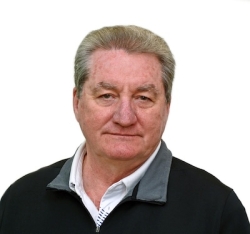
“Doughnut Economics is what lets us say out loud […] that if this isn’t good for our residents, it’s not going to be good for our visitors either.” – Carly Pereboom
What does success mean for a tourism destination when endless growth isn’t the goal? Destination marketing organizations have long been judged by heads in beds, a yardstick that assumes the line should always go up. But in July 2022, the City of Nanaimo, on the east coast of central Vancouver Island in British Columbia, adopted an official community plan (OCP) built on a growth-agnostic model called Doughnut Economics.
Economist Kate Raworth’s model draws two rings. The inner ring is a social foundation that covers everyone’s basic needs, and the outer ring is an ecological ceiling the city shouldn’t overshoot. Communities thrive in between.
The city’s adoption of this model has set Tourism Nanaimo free to pursue sustainability and tourism that benefits the people who live there. Residents helped shape the OCP, and its five goals describe a Nanaimo that is green, connected, healthy, empowered and prosperous. Her team’s job was to plug tourism into the city’s thinking. “Our job wasn’t necessarily to invent a tourism philosophy,” said Carly Pereboom, CEO of Tourism Nanaimo. “It was to stop writing a separate one.” When a tactic can’t be traced back to one of the city’s five goals, she treats it as a signal that something is out of alignment.
The doughnut also gives the team a simple test for growth. For example, growth on an already-busy peak Saturday might cost the community something, while a boost in visitors on a quiet Tuesday in February gives something back.
Residents sit at the centre of that approach. Tourism Nanaimo tracks resident sentiment, runs roundtables, and reports back on what it heard and what it changed. Accessibility and inclusion are a core priority. This work includes Rainbow Registered accreditation. Tourism Nanaimo also offers workshops on allyship and inclusive service, and shares a map that helps people find safe, inclusive washrooms. They’ve created partnerships with Snuneymuxw First Nation, as well as accessibility and Pride groups.
Through Donut Economics aligned with city leadership and residents, Tourism Nanaimo has become a bridge between sustainable policy and everyday practice.
Subscribe to Travel Beyond through Apple Podcasts, Spotify, or your favourite podcast player.
Destination photo provided by Tourism Nanaimo.
Show notes
About Doughnut Economics – The Doughnut Economics Action Lab’s introduction to Kate Raworth’s model, with its inner social foundation, its outer ecological ceiling and the space for people to thrive in between.
Case study: the Doughnut in Nanaimo and Victoria – Doughnut Economics Action Lab research, based on 2021 interviews, on how two Vancouver Island cities began bringing the doughnut model into local planning and community work.
City Plan: Nanaimo ReImagined – Nanaimo’s official community plan, adopted by city council in July 2022, which uses Doughnut Economics to guide land use, climate action, reconciliation, accessibility and inclusion for the next 25 years.
Nanaimo is for Everyone: Our Journey to Rainbow Registered Accreditation – Tourism Nanaimo’s account of earning Rainbow Registered accreditation from Canada’s 2SLGBTQ+ Chamber of Commerce, and what the process meant for its welcome to visitors and residents.
Why 1,000 cups of tea are at the heart of destination stewardship in the Kootenay Rockies – Destination Think’s July 2026 story with guest host Brad Parsell, CEO of Kootenay Rockies Tourism, on the face-to-face relationship building that Pereboom also credits in this episode.
Episode transcript
Carly Pereboom: Doughnut Economics really is what lets us say out loud that if this isn’t good for our residents, then it’s not going to be good for our visitors either. If you lay that lens over everything, the clarity that you then have in terms of what you say yes to and what you say no to is astounding.
David Archer: Welcome to Travel Beyond. I’m David Archer from Destination Think, recording from Haida Gwaii, the territory of the Haida Nation off the north coast of British Columbia in Canada. On this show, we look at travel’s role in making a better world, and we highlight leading destinations and changemakers. Our guests are taking local action that the world can learn from.
David Archer: They’re helping to regenerate ecosystems, communities and economies, and they’re often making positive change happen from the bottom up. Many of the voices we’ve highlighted are part of the Destination Think Collective, a peer group of dozens of ambitious, forward-thinking destinations working toward a better future for travel and the planet.
David Archer: One question that comes up repeatedly in our conversations across the Collective is: what does success mean for tourism destinations these days? Today’s conversation brings us to a destination where a modern theory of economics makes that success crystal clear, and it sets the DMO free to pursue sustainability in a way that I think would be enviable to many of our listeners.
David Archer: Historically, destination marketing organizations have been judged by things like heads in beds or bums in seats, or however you want to put it. In other words, the number of visitors they attract and the dollars those visitors spend. The more the line goes up, the better. You know the story. It feeds into the idea that endless growth is both possible and desirable.
David Archer: But some places in the world are adopting a new school of thinking called Doughnut Economics, first introduced by Kate Raworth from the UK in 2012. This model is designed to be growth agnostic and regenerative. It’s a framework that accounts for the complex, interconnected systems we rely on, and that tourism relies on.
David Archer: To help you visualize this (we’ll include a link in the show notes), the doughnut in this model has two concentric rings. Inside is the social foundation, and outside is the ecological ceiling. The gap in between those two is where society needs to play. That’s the concept. Many cities and regions around the world have adopted this model into their planning, including Amsterdam, Vienna, Toronto, Portland, Oregon, Mexico City and today’s destination, Nanaimo in British Columbia.
David Archer: Carly Pereboom is the CEO of Tourism Nanaimo, and today she tells our guest host, Brad Parsell, how the city’s adoption of Doughnut Economics into municipal planning has given Carly and her team a clear map for success, enabling them to use tourism to make a better place for residents and a better planet.
David Archer: Full disclosure: Carly used to be a colleague of ours at Destination Think, and it’s great to hear her voice again. Now, over to Carly and Brad.
Brad Parsell: First of all, welcome, Carly. Can you tell us your name, your role and where you work?
Carly Pereboom: Thanks for having me. I’m Carly Pereboom, the CEO of Tourism Nanaimo. Nanaimo is located on the east coast of central Vancouver Island in British Columbia, Canada.
Brad Parsell: We have a bit of a connection with Vancouver Island, because we were across the island from each other for a few years there. You were on the east coast, and I was on the west coast in Tofino, so it’s great to chat with you again.
Carly Pereboom: Yeah, it’s great to connect.
Brad Parsell: I’ve heard a lot about the work you’re doing, especially with the City of Nanaimo. I wonder if you could talk a little bit about the City of Nanaimo’s official community plan, and we can start the conversation there.
Carly Pereboom: Absolutely. Nanaimo’s official community plan was adopted in 2022, and it’s based on the Doughnut Economics framework that was created by the economist Kate Raworth. It’s really about balancing sustainable development and combining the concept of planetary boundaries with the complementary concept of social boundaries, making sure that everything is working in sync so that you’re creating a good place to live and a sustainable framework around that.
Brad Parsell: That’s really interesting. Do you know where the city got this framework or this thinking from, or how it all came about?
Carly Pereboom: I think they were introduced to it through a living systems workshop. Kate’s work in Europe is well known, and Amsterdam is a great place to point to as somewhere that adopted it very early on. When the city had the opportunity to recreate its OCP, it really wanted to make sure that it was something encompassing, not just, I would say, the normal objectives of infrastructure and so on.
Carly Pereboom: They wanted to ensure that it was really creating a good place to live and, being on an island, something that would be sustainable in the long term. It’s not just looking at the next five or 10 years, but at the long-term sustainability of growth, especially being on an island.
Carly Pereboom: They really went from there. I know they did some exploratory work, went to Europe, talked to some of the communities there, and then started working with Kate and her team to build out what their OCP would be, based on this economics framework.
Brad Parsell: I know you did a pretty good flyover of Doughnut Economics, but maybe we can unpack it for folks listening who have never heard of it before, because it’s a super fascinating concept. It’s kind of like you’ve fallen short if you’re inside the doughnut on the social side, and you’ve blown past ecological boundaries if you’re on the outside of the doughnut. How does it look in the context of a city plan? Maybe unpack it a little bit for folks.
Carly Pereboom: That’s a lot to unpack.
Brad Parsell: Yeah, it is.
Carly Pereboom: The doughnut is so interesting because normally economists are looking at something from the ground up, and there’s this constant trajectory of growth that, in lots of ways, is looked at as endless success. What the doughnut framework does is put it into a circular framework where everything is interconnected, all those pieces have to come together, and eventually you find your sweet spot. When it comes to the OCP, it’s not just about roads, trails and housing. It also goes into water.
Carly Pereboom: It goes into shade and canopy. How many trees are being replanted in your city? What are the agreements that you have with developers? How much park space are you protecting in the long term? Are you considering the wetlands in and around your city? How are you addressing equality, sustainability, inclusion and accessibility?
Carly Pereboom: From the time that you leave your front door to your workday, to turning around, engaging with community and coming back, are you fuller because of that, or are you depleted because of the experience that you’ve had within your community? That’s the simplest way for me to look at it when we’re chatting about it: making sure that from the moment you leave your front door, you have your work, you have everything else, you’re experiencing your community, and you’re coming back better for it, not worse for it.
Carly Pereboom: That’s a really simple way of looking at it. If all of those pieces are working together the way that they should, then your framework begins to really centre the lived experience of your residents in the greater planning for the city as it grows.
Brad Parsell: I love that. It starts from that foundation of challenging the myth of infinite growth, that things could just keep growing and growing without consequence, which we know is not true.
Carly Pereboom: Yeah, absolutely.
Brad Parsell: The City of Nanaimo has this fairly progressive community plan based on the framework of Doughnut Economics. How does that flow into the work you’re doing at Tourism Nanaimo and with partners on the ground?
Carly Pereboom: Well, I have to give credit where credit is due. Nanaimo already did the hard part. The city wrote the plan that says what a good life here can look like, and it did it in doughnut terms. Our job wasn’t necessarily to invent a tourism philosophy. It was to stop writing a separate one. City Plan: Nanaimo ReImagined basically handed me the shared civic language handbook. It sets out five city goals, and under those big five umbrellas it really demonstrates what we need to do and how we need to meet social capacity. Then the question is how I plug tourism into that, rather than running parallel to it.
Carly Pereboom: Literally, how do I plug into what those deliverables look like? What we’ve been working on is making sure that we’re using the language of the OCP, which has been vetted by residents and community, with tons and tons of work there.
Carly Pereboom: Then, how do we deliberately ensure that our five-year destination development strategy and annual tactical plans are really layering with the city plan, and also layering with our Indigenous communities?
Brad Parsell: I love that. We were talking about it just before we hit record here. In many destinations around the world, I’ve seen the tourism board or tourism organization and the local government or council running on parallel tracks, like you just said. They’re not super interconnected, and in many cases they’re not even speaking the same language. I feel like this framework has given you a really good head start on that.
Carly Pereboom: I don’t think I could ask for anything better. Our four strategy pillars are Better Together, Build Out the Real Nanaimo, Be a Strong Ally and Elevate the Destination. That’s deliberately worded, because the city’s goals are prosperous, connected, healthy, empowered and green. When we’re thinking about the visitor economy and our communities, we need to make sure that we’re speaking that same language, but in a way that our audiences understand. For us, when we’re looking at the OCP, it’s about mapping that alignment, and if a tactic can’t be traced back up to a city goal, that’s a signal to me. That’s not a formatting problem. That’s a signal that something isn’t aligning, right?
Brad Parsell: It sounds like the secret sauce here is centring the resident in all of this. We’ve had episodes about resident sentiment in the past, but from the Nanaimo context and from where you’re sitting, how does that play out? How do you work with residents and centre them in tourism planning?
Carly Pereboom: Well, I think with anything, your social foundation will either be the beginning of something great or the end of you. Your residents are either going to be your allies, and that gives you social licence to really measure your work, or they’ll tear you apart, realistically.
Carly Pereboom: Our whole pillar of Be a Strong Ally is really to ensure that people see themselves in the work that we’re doing, whether that’s through our partnerships with Snuneymuxw First Nation, working with our accessibility council or working with our Pride Society on inclusion.
Carly Pereboom: All of those things matter, and all of those things touch different people’s lives in different ways. It’s about making sure that we’re listening to that lived experience in the community. We do that through our resident sentiment tracking and through constant outreach throughout the year.
Carly Pereboom: We have a survey that runs, and it’s about making sure that we’re popping in and having coffee with folks, really. There was this thing that floated around, and I think it was Nicole Sealey from ITBC who said it once, that you have to have 1,000 cups of tea with someone first.
Carly Pereboom: That’s really the philosophy that has helped us. We have the social licence because we keep asking people to give us feedback, but we keep listening, actioning it and ensuring that it’s delivering against our OCP and also our plan. That resident piece is huge.
Carly Pereboom: You can’t claim to work within a social foundation if you’re not tracking resident sentiment and actually feeling whether residents believe what you’re saying or not.
Brad Parsell: Totally, 100 per cent. I love that you invoked the thousand cups of tea, because that’s become such a through line in the Destination Think Collective, of which Nanaimo is obviously a member.
Brad Parsell: You unpacked something really important there around community engagement. We talk a lot in tourism about resident sentiment and community engagement, but there’s a real responsibility when you engage or consult that you actually do something with it. I see a lot of burnout with surveys, and people are just like, “Well, I keep doing these surveys and nothing comes of it.”
Brad Parsell: Being able to show residents that you’re closing that loop and actioning what they’re saying to you is really cool.
Carly Pereboom: Yeah, and the other part of that is that we’re really keen on making sure that folks not only have the conversation, so everyone hears the same thing in the same room, but that we’re coming back and closing that loop, to your point.
Carly Pereboom: When we have those round tables or one-on-ones, we’re creating a synthesis of that information, and then we’re saying, “You said this. We did this. This is how it’s supporting our community.” Creating that triangle of understanding, where they are deliberately engaging with us and we’re deliberately making sure that we’re listening and actually actioning it, is huge, because then what we’re doing isn’t built in a boardroom and then sold to them. The plan is being built from the engagement that they’ve created, and our job is then just to report back.
Brad Parsell: Yeah, and it builds relationships. It’s not a transactional exchange.
Carly Pereboom: Exactly.
Brad Parsell: You’ve mentioned a few buckets of work. One that I’ve admired from afar for a few years is the work Tourism Nanaimo does around inclusivity and accessibility, which, let’s face it, in 2026 seems to be taking a back seat in certain quarters of society at the moment. I wonder if you could spend a little bit of time on how your social framework connects to and informs that work, because it’s pretty cool stuff you’re doing.
Carly Pereboom: I think the most important work with accessibility and inclusion is recognizing that not everyone moves through the world in the same way. Not everyone’s experience is going to be the same. When you think of it from that lens, when you walk into a room, does everyone feel that they have the opportunity to engage in a way that works for them? When you think about the visitor experience and the resident experience, it really is about making sure that you’re listening and hearing from those folks, and then intentionally making the environment around them work for them, not against them.
Carly Pereboom: I could talk about this at length. It’s something that is very close to my heart, in the sense that I really believe people should be able to access any opportunity that they choose. We’ve gone the route of looking at our OCP and seeing what the city is planning, what it has in infrastructure and where it’s investing each year.
Carly Pereboom: From our perspective, we go out to community, both visitors and residents who identify in different areas of their lives, and they let us know what their experience is. What is that lived transaction as you walk through the world, and how can we implement something that’s actually going to make it better?
Carly Pereboom: We then share those findings annually with the city, and I map them back to the OCP and say, “This is what you’re working on. This is a real pressure point for community. Can we prioritize it and make sure this happens quicker?” Sometimes the answer is yes, and sometimes the answer is no.
Carly Pereboom: Some things take longer. But it shows the community that progress is being made, and it’s also an opportunity for those folks to feel that they have a lot more in-depth input into what their lives look like, whether that’s in the community as a resident or as a visitor.
Carly Pereboom: We take for granted how easy it is to walk through the world from our own experience, and it’s really important that when we’re looking at destination development in our communities overall, we’re looking at it from varying perspectives. For me, and I would say for our team and the work that we do, it’s not about making sure that those words are in our plan.
Carly Pereboom: It’s literally living it. It frames a lot of what we do, and we think about it from lots of different angles.
Brad Parsell: Could you unpack that a little bit more? We’ve heard from a few destinations in the Collective that if you want to bring something to life, you have to walk the walk yourself, with your team, and really lead by example. What does that look like for Tourism Nanaimo in that space?
Carly Pereboom: We worked pretty quickly as an organization on becoming Rainbow Registered, and that’s something that’s in our annual plan. It’s in our operational plan every single year. You don’t just get registered and then say, “Oh, we have that.” It’s something we make sure we’re tracking towards quarterly and annually. We’re Rainbow Registered, and that means a lot to us. We also offer a lot of different workshops to our community.
Carly Pereboom: We have workshops on how to be a good ally, and on customer service, from the front desk to catching the bus. Do you have policies that are inclusive? Do you have policies that hold your third parties accountable for how they walk in the world and how they engage with folks? When you say that you’re inclusive and accessible, you have to ensure that when you’re inviting people into your community, you’re not putting them in harm’s way, whatever that may look like.
Carly Pereboom: We’ve really actioned that through a multitude of policies and processes, ensuring that the folks we’re working with are really going to deliver on what we’ve said is happening. The other part of that is the inclusive bathroom map.
Carly Pereboom: That may seem like a really simple thing, but being able to show folks where there are safe, inclusive spaces and where they have access to a washroom, with no discussion about it, has created almost a map of safe space in our city. It’s about constantly putting out the resources and opportunities for people to connect, to learn and to create curiosity, and ensuring that we’re all working towards making it a welcoming space for both residents and visitors. You just have to roll yourself up in it. There are going to be times that you trip, and there are going to be times that you maybe do something wrong. But the purpose of it is that you’re always trying, and you have to keep approaching it that way.
Brad Parsell: I’m picking up on something you’ve mentioned a couple of times, which is this idea that what’s good for the resident is good for the visitor. That’s something I think a lot about: a great place to live is typically a great place to visit.
Brad Parsell: It doesn’t necessarily always work the other way around. A great place to visit is not always a great place to live.
Carly Pereboom: Yeah.
Brad Parsell: As we zoom out and come back to this framework around Doughnut Economics and the OCP, it strikes me that this is really getting to the heart of it. It seems like it was built for residents first, but it has lots of applications on the visitor side. If Nanaimo can be all it wants to be in the OCP, it’s also going to make a really cool destination. Is that how you feel about it?
Carly Pereboom: Absolutely. When your residents are living a good life, who doesn’t want to be there? Tracking it back to your OCP and traditional thinking around destination development, the way that we look at it from our framework is that we can’t have growth for growth’s sake. Growth on a peak Saturday costs the community something, when you look at it that way. Growth on a Tuesday in February gives something back.
Carly Pereboom: Doughnut Economics really is what lets us say out loud that that’s how it is. It lets us say very plainly in our strategy documents that if this isn’t good for our residents, then it’s not going to be good for our visitors either, and that’s not what we need. If we want sustainability for small businesses and so on, we have an opportunity for growth in this area, but it has to be very measured. It’s such a simple framework to go back to and test the theory of almost anything that you’re going to do,
Carly Pereboom: making sure that you’ve triaged things appropriately and that you’re not going over a limit that isn’t sustainable, whether that’s too many people in the downtown core at one period of time or not. If you lay that lens over everything, the clarity that you then have in terms of what you say yes to and what you say no to is astounding.
Brad Parsell: Yeah, just having that foundation, that thing to hold things up to: is this in frame or not? I think that’s always super important. This is really cool stuff, and this idea of Doughnut Economics, integrated into a local government framework like the OCP, the official community plan, is really interesting.
Brad Parsell: Is there any advice you’d give to other destinations or community builders listening to this podcast who want to start moving in the direction that Nanaimo is moving in?
Carly Pereboom: I would say that in Nanaimo, the way that we’re looking at it, tourism isn’t a sector we’re growing next to the community. It’s one of the ways the community reaches the goals that the community basically wrote for itself. The OCP has told us what a good life looks like, and our job is to make sure that visitors help pay for it and don’t get in the way of it.
Carly Pereboom: Realistically, in terms of how to implement it, it’s about looking at your governance and how you show up, because being in the room isn’t the same as hosting the table.
Carly Pereboom: I would say our job in this has certainly been to make sure that tourism is named next to civic plans. We’re looking at how we can be a collaborator with our planning department, our transportation department and our city. When you start sitting down and making sure that you’re at the table and you’re hosting it to connect all of those things, it becomes almost second nature for everyone that you’re going to be invited into the planning, that you’re going to be invited to the table, and that those things are also being connected. That can’t be manufactured unless you are actually hosting the table.
Carly Pereboom: I think that’s probably the biggest piece: if there isn’t a room already where those folks are all coming together, then as the DMO, become the host at the table. Make sure that all those people are coming together, and that you’re really creating the opportunity for those connections and aha moments. The more folks that start to get that, the easier your job becomes in creating something that’s a lot more intentional.
Brad Parsell: That’s such an awesome way to finish. Carly, thank you so much for your time this morning. It’s been great to reconnect.
Carly Pereboom: Yes, you as well. Thank you so much for having me.
Brad Parsell: You bet. This has been Travel Beyond, presented by Destination Think. I’m Brad Parsell, the CEO of Kootenay Rockies Tourism and a member of the Destination Think Collective. Many thanks to Carly, the CEO of Tourism Nanaimo, for joining me as today’s guest. For show notes and to learn more about the Collective, visit destinationthink.com.
Brad Parsell: This episode was produced by David Archer, who also composed the theme music. Amy Bjarnason and Katie Baur provided production support. If you like what you hear, please take a moment to give us a five-star rating on Apple Podcasts or Spotify. It helps more people find our show. We’ll be back next time. Until then, take care.





0 Comments