

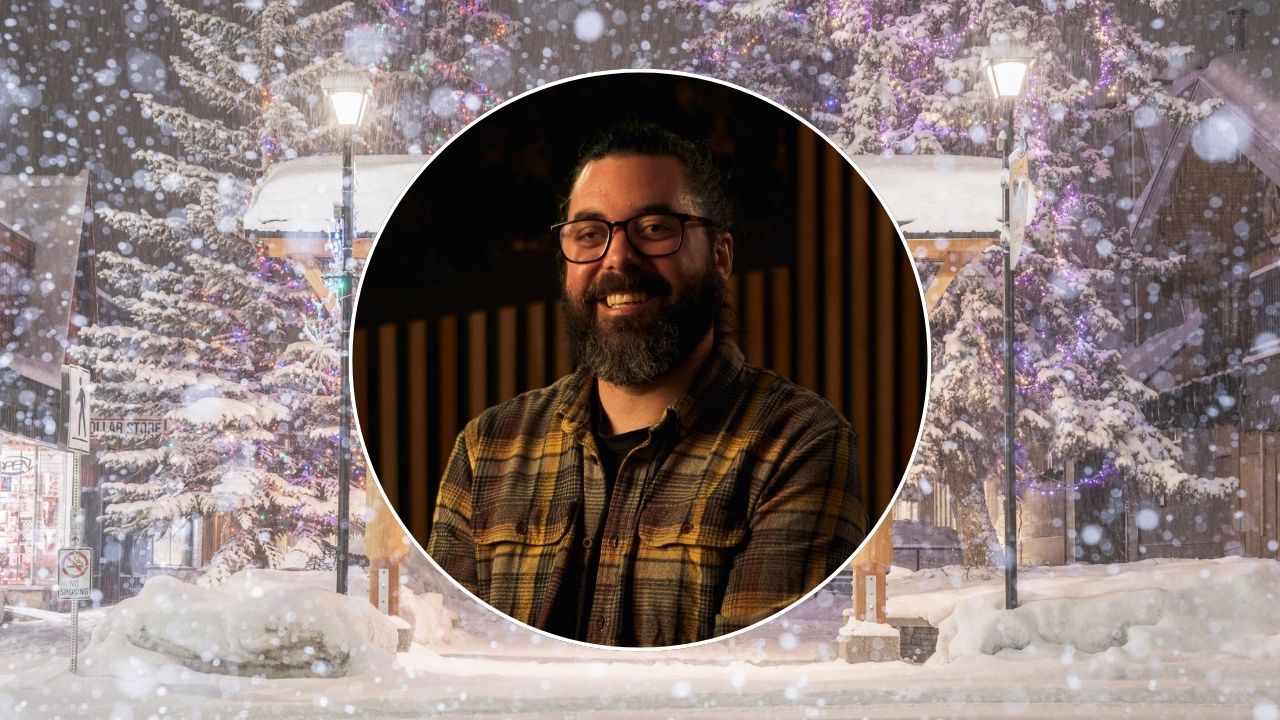
“You can have the greatest destination stewardship plan that the world’s ever seen, but if you don’t have the relationships to leverage it, it’s not going to go very far.”
– Brad Parsell, Kootenay Rockies Tourism
The idea of having “1,000 cups of tea” is taking on a life of its own within the Destination Think Collective. It has become a shorthand, says Brad Parsell, for doing meaningful engagement within communities as a tourism organization.
Brad has brought this idea into his new role as the CEO at Kootenay Rockies Tourism (KRT). “I’m a big advocate for getting out into the community and trying to meet as many people as you can, even if they don’t have an obvious connection to tourism,” he says.
Having tea time consistently can break down barriers. Brad has observed that tension can arise between destination organizations and their local governments due to conflicting priorities. Destinations tend to focus on visitors, while the government is concerned with constituents. But destinations that centre the needs of residents, he says, can unlock doors with governments, because “now you’re talking the same language.”
The Kootenay Rockies region in south-east British Columbia is an area the size of Croatia, and there are glimmers of sustainability leadership all over. For example, Accelerate Kootenays is Canada’s first clean transportation strategy driven by community members. The driving experience is crucial here. Visitors take a route known as the “Powder Highway” to access ski resorts, outdoor adventures, and mountain communities. More than 50 charging stations have been installed, which has opened up access to EVs. This effort is proving it’s possible to bring innovations like these to rural British Columbia.
Tourism Revelstoke, a small destination within the region, has created the Thanksgiving Back campaign. During the autumn shoulder season, visitors are invited to pitch in as volunteers in exchange for up to $400 to cover the cost of a hotel stay. Participants have helped to put on arts festivals and maintain trails, among other projects. This way, visitors get connected with the community, and local organizations benefit from their labour. In Fernie, another mountain town, the AmbassadorWILD program encourages responsible travel through outreach to visitors, care for popular outdoor sites, and by collecting data. Both programs are models worth studying for the ways they connect visitors and residents.
Returning readers or listeners to Travel Beyond may remember Brad from previous episodes recorded during his three years leading Tourism Tofino as Executive Director, when that organization became a founding member of the Destination Think Collective. He and his team developed a destination stewardship plan alongside residents and in partnership with the Tla-o-qui-aht First Nation. It’s called “ʔiisaak – Tofino Stands For Respect”.The plain-language plan is deceptively simple, but it rests atop an ocean of trust and community support for stewardship.
Though leading a large geographical region is a new opportunity for Brad, he says the principles of community engagement remain the same. “Our superpower,” he says, “is this ability to convene people from across the region.” He says Kootenay Rockies Tourism takes a higher-level view that allows them to connect the dots between people, places, and ideas to help them share solutions.
To zoom out even further, Brad notes that the Collective that KRT is now a part of is a compelling model for regional tourism organizations themselves. Like KRT, the Collective is connecting people and places to accelerate destination stewardship.
Sitting down with one another to listen and learn is a time-tested way to build relationships that knit communities together. For destination leaders, having 1,000 cups of tea (or your beverage of choice) is a pathway to tourism resiliency and our collective well-being.
This episode, you’ll learn:
- Why “1,000 cups of tea” has become shorthand among Collective members for pursuing deep community engagement.
- Why centering the resident as a tourism organization can unlock better relationships with local government.
- About examples of destination stewardship in the Kootenay Rockies, like EVs and volontourism.
- What Brad Parsell has learned from the Collective, and how that affects the way he views the role of the regional tourism organization.
Subscribe to Travel Beyond through Apple Podcasts, Spotify, or your favourite podcast player.
Show notes
- AmbassadorWILD – A sustainable tourism program focused on outreach and ethical outdoor recreation in Fernie, British Columbia.
- CopenPay – A project that rewards visitors for good deeds and green activities in Copenhagen.
- Community Energy Association – An organization involved with EV charging stations in the Kootenays.
- Destination Think Collective – A peer group of dozens of leading destinations working together to accelerate the journey to a sustainable future.
- Kootenay Rockies Tourism – The regional destination management organization representing an area in southeastern British Columbia.
- Thanksgiving Back – An initiative that connects visitors with volunteer projects.
- Tourism Tofino – The destination management association representing Tofino, British Columbia.
Destination image provided by Kootenay Rockies Tourism.
Episode transcript
Brad Parsell: I think that’s really the secret sauce. You can have the greatest destination stewardship plan that the world’s ever seen, but if you don’t have the relationships to leverage it, it’s not going to go very far. So, a thousand cups of tea, my friends.
David Archer: Welcome to Travel Beyond. I’m David Archer from Destination Think, recording from Haida Gwaii, the territory of the Haida Nation off the north coast of British Columbia in Canada. On this show, we look at travel’s role in making a better world, and we highlight leading destinations and changemakers. Our guests are taking local action that the world can learn from.
They’re helping to regenerate ecosystems, communities, and economies, and they’re often making positive change happen from the bottom up. Many of the voices that we’ve highlighted are part of the Destination Think Collective, a peer group of dozens of ambitious, forward-thinking destinations working toward a better future for travel and the planet.
And this is the first of a new series of episodes that we’re producing this year. We’re going to continue to talk with destinations in the Collective, and most of them we haven’t heard from before. We’ll highlight some of the interesting and inspiring things happening in those places that can show us what’s possible for destination organizations or for tourism and stewardship more broadly.
We know that every place can teach other places a thing or two, so we hope that that can help you out in your own work in tourism or community leadership. And today’s guest is part of the Collective and is also going to be leading several conversations coming up on the podcast, so I’m very pleased to introduce Brad.
Brad, maybe to start with, first of all, welcome, and can you tell us your, your name, your role, and where you work?
Brad Parsell: Yeah, absolutely. Great to be here. So my name is Brad Parsell, and currently I’m the CEO of Kootenay Rockies Tourism, which is a regional tourism organization based in sort of the southeast corner of what we now know as British Columbia in Canada.
David Archer: Yeah, and listeners to the podcast might be familiar with you because you have been– We’ve done this interview w- at least once before.
Brad Parsell: We have, yeah.
David Archer: Not this particular one, but yeah, tell us about where you came from before Kootenay Rockies.
Brad Parsell: Yeah. I mean, to go all the way back, I’m originally from Aotearoa New Zealand. I spent quite a lot of time living in Australia. I made Canada my permanent home in 2013. And for most of that time in Canada, I’ve lived in Fernie, BC, which is in the region that I’m now working with.
So love the Kootenays, love Fernie, have lots of connections to this region. But in 2022, had the opportunity to go out to Vancouver Island on the west coast of Canada and lead Tourism Tofino for about three years. So yeah, if you’ve listened to this podcast before, you’ve probably heard me talking as the former leader of Tourism Tofino, and then at the end of 2025, so the end of last year? I made the move back to the Kootenay region to take on this, this new role as CEO of Kootenay Rockies Tourism.
David Archer: Yeah. So it’s a, a little bit of a, a homecoming in a sense.
Brad Parsell: It is, yeah. It’s so nice to be back in, in this part of the world. I mean, Tofino is pretty beautiful as well, don’t get me wrong.
David Archer: Yeah, absolutely. And if you’d like to hear more about Tofino, you can scroll back in through the podcast feed. We spoke last year, I believe, about tourism funding, about infrastructure in Tofino.
Brad Parsell: That’s right.
David Archer: Among other topics. But go check that out. So you’re new in this role for the Kootenay Rockies.
What’s your general approach to it? How are you finding it so far, and what are you up to?
Brad Parsell: Yeah. So I’m six months into the role, and for a bit of context for folks that are listening, Tofino is a town of 2,500 people, very small, on the end of a peninsula at the end of a very long road surrounded by, you know, incredible Indigenous communities. But very, very small, right? Very, very small town.
I felt by the time I left there, I felt very, very connected. What I’m now working on is, is a region that’s about 58,000 square kilometers, I’m told, about the size of Croatia for the – for our European listeners. So, yeah, how am I approaching it? I think, again, I have some familiarity with the region.
I’ve lived here for, for almost a decade and I, I know lots of folks. But it is a very, very different thing from working very, very close on the ground embedded in a very small community to sort of zooming out, almost, to this sort of bigger region.
But I think the approach is really the same. And before we hit record here, we were joking about this thing. So you’ve mentioned the Destination Think Collective, which – I was a founding member at Tourism Tofino and, and now a new member again with Kootenay Rockies Tourism.
And one of the things that we talk about a lot is this idea of the thousand cups of coffee or the thousand cups of tea, or depending who you’re talking to, the thousand cups of beer maybe. And it’s kind of become shorthand in the Collective for this idea of like deep engagement, within communities and within the regions that you’re working in as a tourism organization.
And often I sort of take that for granted, but you know, that was certainly the approach I brought to Tofino is that I wanted to sit down with, with as many people as I could. I was new to the community. I didn’t want to assume anything. I wanted to hear people’s lived experience, the good, the bad, and the ugly of tourism and what it has been and what it could be.
And that’s very much the approach I’m trying to take in the Kootenays. Now it’s a lot harder ’cause it’s huge, and there’s a lot more people and a lot more businesses and a lot more players. But it’s still that same idea even though I’ve lived here for a long time. I really wanna meet people where they are and understand, what are the opportunities out here, and what are some of the things we need to overcome.
And then what if we think big, in tourism in the Kootenays, which is something I’ve really taken from the Collective as well is this, this idea of bold, audacious sort of thinking. So I’m sort of six months in, to answer your question head on to this, maybe it’s 10,000 cups of coffee.
David Archer: Yeah. Spread out over a whole nation-sized region.
Brad Parsell: Yeah. But it’s been really great. It’s been really, really awesome to just hear what’s going on here. And there’s lots of really cool things that we can get into a bit later.
But, to dig a bit deeper on the thousand cups of tea, ’cause it’s, it’s something I don’t get a chance to talk about very often is – sounds super obvious, right?
Like anybody doing a tourism plan or trying to think about the future of tourism, you need to go and do deep engagement. You need to talk to everybody. It’s like pretty 101. But I’ve found in my time in this space, it can be pretty transactional. Like it’s sending out surveys or emails, and cold, and I think somewhere along the way in our sort of endless quest for efficiency and productivity, we kind of forgot to just sit down with each other and, and take a beat. And some of that comes from really deep roots, from Indigenous cultures, frankly.
We, we were talking a bit before about, Māori culture in New Zealand and Nuu-chah-nulth culture on Vancouver Island, and I’m sure many Indigenous cultures around the world. When you have food or drink, that’s the time where stories are told, and knowledge is shared, and this idea that you’re sort of taking in nourishment both for your body and your mind kind of at the same time.
It’s easier to have tough conversations over a beer or some food as opposed to trying to do it on Zoom, or, you know? Like, a lot of nuance gets lost there.
David Archer: Sure, yeah. Jumping from window to window. Yeah.
Brad Parsell: Yeah. So I’m a, I’m a big advocate for that, getting out into the community and trying to meet as many people as you can, even if they don’t have an obvious connection to tourism.
They’re just folks that live there, or they’re gonna have an opinion or some ideas. And so yeah, the thousand cups of coffee. It’s more profound, maybe, than we give it credit for. I think it’s something we could all incorporate a bit more into our day-to-day.
David Archer: Yeah. Yeah, I like it. What’s your impression of public support or attitude toward tourism in the Kootenay Rockies based on your time living there and, and then now?
Brad Parsell: Tourism in the Kootenays is, is largely outdoor-based. People come here ’cause it’s beautiful because of the mountains. We have multiple mountain ranges, the western slope of the Canadian Rockies. So it’s a v- it’s a lifestyle, it’s a vibe.
That attracts the same kind of people in a way. And so I think generally when you look at some of the resident sentiment, folks are pretty supportive of tourism, because it supports this skiing and mountain biking and this kind of life that we’ve all kind of bought into.
So it’s that outdoor mountain culture thing for sure. But it’s – the thing that’s cool about the Kootenays, and the thing I’ve been thinking a lot about as I’ve been driving around having these 10,000 cups of coffee is somehow – like it, it’s a mountain culture vibe and there’s lots of that around the world, in North America and other places, Europe, but it really hasn’t sold out. Like, it’s not pretentious in the Kootenays. It’s still pretty grungy, it’s still pretty rough around the edges. And it’s the people, like, the people are awesome. Like, there’s lots of characters out here doing crazy stuff. So I think folks are pretty supportive. The public attitude towards tourism out here is, is generally pretty good. Like folks are coming out here to do the same stuff that we like to do and, there’s a, there’s that kind of recognition there.
Potentially in the Kootenays we haven’t really got to a place where other members of the Collective have got to, and even potentially Tofino in peak summer has gotten to where we’re really butting up against capacity or negative resident sentiment.
I mean, there’s pockets, there’s places at certain times of the year, I’m sure, where that’s happening in the Kootenays, but we’re not, we’re not quite there yet, which is a- an amazing opportunity in terms of getting out in front of that. Like, let’s not get to a point where you’re about to run out of drinking water ’cause there’s too many tourists.
Like let’s, let’s pull it back a bit and let’s plan to not end up in that place.
David Archer: Yeah, it’s sort of the – We hear this a lot from mountain communities in different places. Like, they wanna protect the, particular culture that, that they’ve developed and, and the lifestyle. It’s why a lot of people move to more remote areas where there’s recreation opportunities like that.
How do you think attitudes towards stewardship and sustainability interact with that? Like, do you think there’s a level of urgency that the region might feel or yeah, what’s your impression?
Brad Parsell: Yeah, I think so. I mean, there’s – it’s very, very different to my experience in Tofino, which was a, as quite a leader in the environmental space and lots of not-for-profits and kind of an all-hands-on-deck kind of approach. But we have that out here too, and I, and I think the parallels are that nature is the draw.
Like, we just kinda said it, right? Like, the nature’s what, it’s the big mountains, it’s the big nature, it’s the lakes, the rivers that are bringing people to places like the Kootenays. And I don’t think it’s a hard jump for a lot of people to go, “Well, nature is this thing we love and we all enjoy, and we need to protect it.”
I don’t – Like, no matter where you are or what the political climate is, I think that’s a fairly easy jump to make for most folks, right?
David Archer: It’s a safe idea, for sure.
Brad Parsell: And that’s kind of your in, I think. And, and then the other thing I think that I’m taking from Tofino and bringing to the Kootenays, and again, maybe the need is not quite there yet, but this idea around, as a principle of stewardship, I think, is, is that residents need to be centered in the tourism conversation, and in planning and development. And again, that sounds like one of those things like the thousand cups of coffee where it’s like, “Oh, of course,” like that’s, that’s 101. But it doesn’t happen, in a, in a lot of places and in a meaningful way anyway. And it does cool things.
Like, in Tofino what it did was it, like, one of the reasons tourism boards, DMOs, if you’re not part of government, if you’re independent, there can be tension, right? Between a tourism organization and the local government. And it’s because we’re focused on different groups of people. Like the tourism people are focused on the visitor, and then the local government’s focused on the resident, and it’s just ripe, fertile ground for conflict there ’cause you’re not speaking the same language, and you’re not addressing the same audience.
Centreing the resident as a tourism organization unlocks this door to better relationships with local government, because now you’re talking the same language. You’re talking about their constituents and stuff like that. And I’m seeing that in the Kootenays here, here. The future is still to be written in a lot of places here about what tourism’s gonna look like in the end and feel like, and so there’s a very lively conversation in different parts of the region around that kind of thing, and I think sometimes tourism boards and local governments are coming at it from a different way. So I see that kind of parallel in terms of, stewardship.
I mean, in terms of the level of urgency, I think the externalities are the same everywhere, that we’re all facing, that are challenging the status quo of tourism. We’re thinking a lot about resiliency in the face of climate change, climate-related events, which I had firsthand experience in Tofino with the highway out there closing, and certainly we’ve experienced flooding and wildfires in the Kootenays, and that’s something that we need to take on. The whole idea around centreing Indigenous worldviews and Indigenous rights and title in the tourism context, like, that is a huge part of stewardship, and we’re really trying to look at that. It’s a different context, obviously, here than it was in Tofino, and it will be for everyone in different parts of the world, but it’s super-duper important.
So I think there is that urgency. I think people feel it. I think the other thing that’s going on a lot in the Kootenays, which is very eerily familiar from my time in Tofino, is this challenge around municipal infrastructure and, and the towns and the wastewater treatment is a huge problem in the Kootenays, and many times of the year in spring freshet and high melting periods, raw sewage has to be released into river systems because it, the systems are just not built to handle that volume coming through, of, of inflow and infiltration. So we’re trying to build these sustainable visitor economies on crumbling infrastructure.
We need to be live to that, or we need to be, as an industry, thinking about that. So, so yeah, there is some urgency out here, and I think there is this feeling that stewardship’s really important.
David Archer: Yeah. And I’d like to talk about the possibilities of what, what might come next. But maybe first we could talk about some of the positive stewardship examples that already exist in the Kootenay Rockies. You mentioned before we started recording the Thanksgiving Back Project, which seems like a really good example of sort of mixing the resident and visitor needs, right?
Brad Parsell: It’s a really cool one. And again, one, a, a really simple idea. And this is the, these are the ideas that are coming out of the destinations in the Collective that I love, that are just, it’s kinda like, “Oh yeah, why didn’t I think of that?” Like, that’s super, super obvious. But, but yeah, Tourism Revelstoke, the destination organization there in Revy, started this program called Thanksgiving Back.
And basically, so Thanksgiving is traditionally in the shoulder season for most places in, in Canada. It’s sort of in, in October, in between the summer and the winter seasons. And they saw this opportunity. There, there was a couple things going on. They were having volunteer burnout, needed more volunteer hours for all the local not-for-profits to do the good work that they do.
So think, trail groups, et cetera, et cetera. They wanted to fill hotels in off-season, and kinda just came up with this cool idea, like, “Hey, if you want to come to Revelstoke this time of year in Thanksgiving, and you want to contribute and volunteer your time towards some local not-for-profit need, we’ll pay for your hotel to come,” And it’s super cool. Like, a super cool example of all of a sudden you’ve got visitors and residents working together to fix trails in, in the Revelstoke area and sharing stories and having that interaction. It’s a completely different experience for the visitor. And I was like, “Man, that’s, that’s pretty cool.”
Super simple, but super effective and has echoes of other things in the collective, like CopenPay and this idea of sort of visitor nudging and giving visitors opportunities to, to contribute and give back in various ways. So, so that’s a really cool one.
David Archer: Absolutely. And then on the larger infrastructure side of things, I know that the Kootenay Rockies has been a leader in BC, in rural communities at least, for electric vehicle charging, right?
Brad Parsell: Yeah, totally. So, I think very early on and way before I got here, Kootenay Rockies Tourism, in partnership with the Community Energy Association, kind of realized that, our region, we’re the home of the Powder Highway, which is one of our big consumer-facing brands. It links up seven or eight, like, major ski resorts in Western Canada, and this idea of the highway and how you get to the Kootenays and how you get around in the Kootenays is, we’re a drive destination.
We’re a car destination. Like, there’s only a handful of airports in Cranbrook and Castle. You can’t fly around the Kootenays. There’s no passenger rail, unfortunately. I mean, that’s a conversation for another day, but Canada completely missed the boat or missed the train, as it were, on passenger rail, which is un- which is unfortunate.
But, but anyway, what we have here in the Kootenays is we’re always going to be a drive destination. People are always going to drive around here. It’s just kind of our lot in life. And so I think very early on folks were like, “Well, we need, if that’s gonna be the way people move around, how do we decarbonize that mode of transportation?”
And electric vehicles were pretty, relatively new in terms of the adoption stage back then. Like, we’re going back quite a while, like, before the pandemic. And so yeah, there was a partnership and some funding secured. I think in the end, they installed over 50, five-zero EV chargers around the rural Kootenays, which was pretty cool.
And I think there’s a huge opportunity to sort of keep running with that ball and, and keep going. There’s a lot of cool myths that can be busted in, in mountain, snowy, cold places with not much sunshine. Like, I still hear, “Oh, you can’t have an EV out here.” Like, “It’s too snowy” or it’s, “There’s –
David Archer: Oh, okay.
Brad Parsell: – not enough sunshine for solar or things.”
And it’s like, there is. Like, you can absolutely do it. And so, I think how we can keep going down that road is, is something I’m super interested in.
David Archer: Amazing. And you mentioned the Collective earlier, and sharing ideas and how, Thanksgiving Back is a little bit like CopenPay, which is a little bit like other ideas. What kinds of things are you learning from members in the Collective, and how is that affecting your work?
Brad Parsell: Oh man, there’s been so much, and I’ve, I’ve been part of it now for I guess it’s going on almost three years that it’s been around. And, first and foremost, the people, like I’ve met, met people and connected with folks doing this work around the world that I would never in a thousand years have crossed paths with.
So that, that on its own has been worth its weight in gold. It’s kinda cool to think about, there are a lot of challenges, and, as we try to take tourism forward in a sustainable way, I mean, the big elephant in the room is like, long-haul flights and emissions and like there’s just so many things that we’re up against in terms of, trying to make this industry something we can all really be proud of.
But man, there’s so many cool little things happening already that, like you just said, the CopenPay thing or the this thing or that thing. There’s this mosaic of really cool ideas that, it’s almost like a menu, a tasting menu of different things that we’ve distilled down to like the 20 core ingredients of what could move the needle on some of this stuff, right?
And so you get this tasting menu that you can kinda just go, “Okay, well maybe that, that doesn’t work in my context, but I could take these three things and deploy them pretty easily, and it would really, really make a difference.” So yeah, I think for us in Kootenay Rockies Tourism, me being a new leader here, this first year is about the thousand cups of coffee, and it’s about thinking about possibilities and where we could take this region.
There’s so much to build on already, as we’ve just kinda talked about. But yeah, the Collective’s really – it’s these core ideas that are sort of recirculating over and over again in different contexts that you can kinda grab from. So –
David Archer: Yeah.
Brad Parsell: – It’s been huge. And sort of all of us realizing in real time sometimes that we’re sharing these same… Like, there was a really cool call recently about – something I’ve thought a lot about since I’ve been back in the Kootenays is trails. Like, one of the biggest draws to mountain regions is trails, particularly outside of snow season, right? Tourism organizations throughout mountain destinations all over the world do a fantastic job of promoting trails. Maybe too good of a job. And these trails get pretty beat up by visitors, and it’s really left to these volunteer residents at the end of the season to sort of pick up the pieces and try to keep going, trying to figure out ways to do bake sales to keep funding, maintaining the trails.
And so you start to ask the question, do tourism organizations have some responsibility in terms of trail maintenance? I’d argue that they do. There’s really interesting conversations in Bend, Oregon, and in the Thompson Okanagan here in Canada, and different places around what, what does that look like? Tourism giving back to something as simple as trail maintenance, so it’s pretty cool.
David Archer: Yeah, and we actually have an episode coming up about trail maintenance as well. And we were talking off mic before about the Collective– maybe there’s a parallel to being a tourism region as well, right? Like bringing different groups together.
Brad Parsell: It’s been really interesting watching the Collective evolve over the first two or three years. It’s these 40-odd destinations that are, in a really structured, thoughtful way comparing notes and identifying shared challenges and opportunities and ways to address them.
And ultimately, as a collective we’re stronger together, like sort of sharing ideas. And so I’ve come from this very small tourism organization, a very small town of Tofino. Now I’m in this really large jurisdiction region with multiple towns, each with their unique vibe and different things going on.
And I think there’s a lot of soul-searching going on for me right now. It’s like, what is even the role of a regional tourism? You know, You’ve got a national one and a provincial or state one, and community ones in some cases, and then we’re this kind of weird middle layer of the cake. Like, what are we doing here?
What’s the value proposition? Where do we get out of the way and let others lead, and where do we lead? And so this has been part of this first year of trying to figure all that out. And it’s been, to your point, this slowly dawning realization that, oh, like, the Collective model that we’re doing globally is kind of like the model for a regional DMO.
And it’s like, because we’re a little bit higher off the ground, we don’t necessarily have our hands on all the levers of change. We don’t have all the relationships. We don’t have the agency maybe that you do at a Tourism Tofino. But what we do have, our superpower is this ability to convene people from across the region and to take this higher view of what’s going on in the region and be able to connect the dots and be like, “Hey, like this person over here in Revelstoke’s doing this really cool thing, and somebody down here in Nelson’s blowing their brains out trying to figure out how to solve the same problem. Let’s put these two together and 10X this kind of solution.”
And so yeah, it kind of feels like more and more that my experience with the Collective and working with all these destinations around the world is actually going to inform how I set up and how I think about this regional tourism organization, and almost doing like – I hope it’s not proprietary Destination Think. But almost like taking the same model and sort of rolling it out across our region. I think there’s a lot of power in that – lighthousing great examples and connecting people. Like, there’s lots of cool stuff that comes out of that.
David Archer: Yeah, yeah. It helps us educate one another. It helps us inspire each other, and I’m glad to hear that it’s an inspiration for some regional activity and connection. Is there anything else that you’d like to say to our listeners?
Any advice for destinations or tourism leaders working on stewardship? Or any, any last thoughts?
Brad Parsell: No, I’m really excited to speak to some of the other leaders in the Collective. Super grateful for the opportunity to maybe lead a couple of these conversations, so looking forward to the episodes coming up. Yeah, I think, again, not to sort of bang on about it too much, but that, that personal connection, the thousand cups of coffee thing, I think it’s really, really important.
I’ve been doing a lot of work around AI at the moment and trying to you know, bring this new organization into this sort of AI reality that we’re in, and I get excited about it and swept up in it, but then I have to check myself and remember that, hey, like tourism, travel, like we’re in the business of like human interaction and learning from each other and, and that face-to-face.
And so like, let’s not, in our race to be more efficient and more productive, forget about that. Do you know what I mean? And so I think that’s really the secret sauce. You can have the greatest destination stewardship plan that the world’s ever seen, but if you don’t have the relationships to leverage it, it’s not going to go very far.
So, a thousand cups of tea, my friends.
David Archer: That’s a great place to leave it. Thanks so much for joining me for today’s chat, and I’m, I’m really glad to pass you the microphone for future episodes. Looking forward to it.
Brad Parsell: Thanks, man. I really appreciate it.
David Archer: This has been Travel Beyond presented by Destination Think, and that was Brad Parsell, CEO at Kootenay Rockies Tourism. For show notes and to learn more about the Collective, visit destinationthink dot com. This episode was produced and has theme music composed by me. Amy Bjarnason, Katie Baur, and Rodney Payne provided production support.
If you like what you hear, please take a moment to give us a five-star rating on Apple Podcasts or Spotify. It helps more people find our show, and we’ll be back next time. Talk to you then.




0 Comments